Water leak in the building right now: what to do first
Emergency leak detection means locating a leak you cannot see, fast, so the right pipe gets repaired and the wrong wall stays closed. Our dispatch line is open 24/7, and we book same-day appointments when a plumber is free.
While you wait, close the main shutoff valve if water is actively falling or pooling. Move furniture and papers off the floor under the wet spot, and put a bucket under any drip. If the water is near an outlet, a light fixture or the electrical panel, leave the power alone unless you can reach the panel without standing in water.
Water meter still spinning with everything off
A meter that keeps moving when every tap, toilet and appliance is idle is the clearest sign of a leak somewhere past the meter. You can test it yourself in about ten minutes. Ask the owner or super where the meter sits, since in many older buildings it is in the basement or a utility room.
- Turn off every faucet, the dishwasher, the washing machine and the ice maker, and do not flush.
- Read the meter dial and note the number, or watch the small leak indicator triangle or wheel.
- Wait fifteen minutes without using any water, then read it again.
- If the number moved or the indicator keeps turning, water is escaping somewhere.
Next, close the main valve for your own unit or building and look again. If the meter stops, the leak is inside. If it keeps running with the main closed, either the valve is not sealing or the leak sits on the street side of your shutoff.
What a high water bill can and cannot tell you
A bill that jumps with no change in habits is worth a meter check, but the bill alone cannot locate anything. A running toilet, a dripping faucet or a new tenant can raise usage as much as a hidden pipe leak can. In a multi-unit building, the owner's bill covers every unit, so a leak in one apartment or in the shared riser can raise a bill that nobody there can explain. Do the meter test first, then call.
Ceiling stain or wall leak: urgent water from above
A brown ring on a ceiling or a bubbling patch of paint often means water has been traveling for a while. Water follows pipes, joists and the path of least resistance, so the stain may sit several feet from the break. In a multi-story building the source is often a bathroom, kitchen or radiator line in the unit above, or a shared riser inside a wall.
Close the nearest shutoff, then the main if the drip does not slow. Do not poke a bulging ceiling with your hand, because it can hold a surprising amount of water. If a light fixture is wet, keep the switch off and call.
Signs the water is coming from inside a wall or ceiling
A single sign can have other causes. Two together usually justify a detection visit.
- Paint bubbles, peels or turns brown with no obvious roof or window source.
- A wall feels cool or damp to the hand near a bathroom or kitchen.
- You hear a faint hiss or trickle when the building is quiet.
- Neighbors below report a stain that grows after someone upstairs showers or runs the dishwasher.
In brownstones and two-family houses, tenants upstairs and downstairs often share the same supply risers and waste stack. Tell the owner or super before we arrive, because access to the unit above may be needed to trace the line. A plumber does not repair damaged drywall, paint or plaster, so plan on a separate trade for the finish work after the pipe is fixed.
Leaks under a basement floor, behind walls or as a warm spot
Many Union City buildings have basements, so hidden leaks often run under a concrete floor or inside a foundation wall. Signs include a damp patch on the slab, a musty smell, efflorescence (white mineral crust) on masonry, or a hot water pipe leaking under the floor that leaves one warm spot underfoot.
A warm spot on a floor, especially over a hot water line, is a reason to call the same day. Hot water that escapes keeps heating the floor and can raise your gas or electric use before you notice any wet carpet.
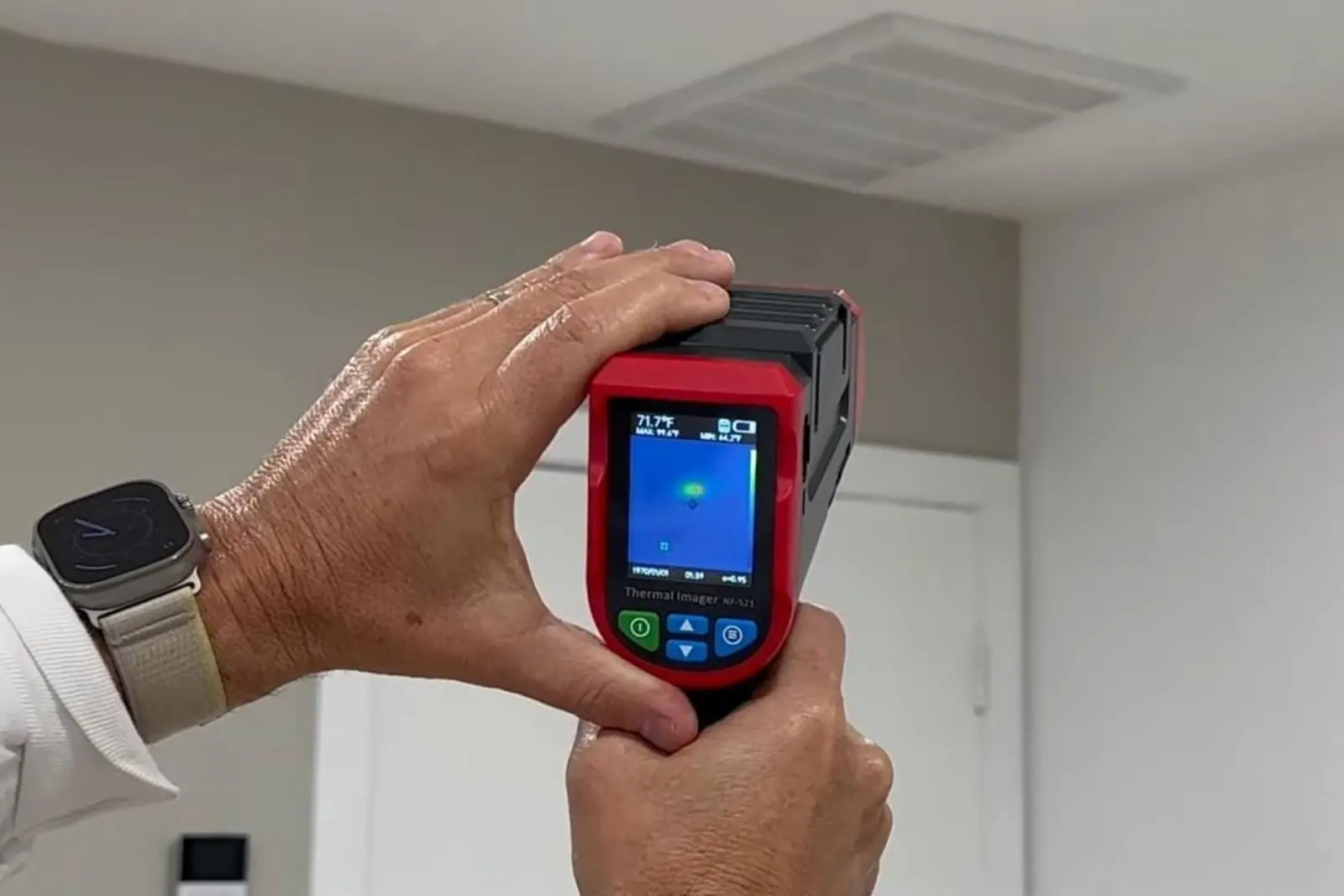
Tracing these leaks starts without a hammer. We listen on the pipe with acoustic equipment, scan with thermal imaging, and isolate sections with a pressure test. Only then do we mark the spot and open the smallest area that reaches the pipe. If the water seems to come in from outside through the foundation, that is a drainage question, and basement waterproofing is the page to read.
Buried line leaks between the street and the building
The service line is the pipe that carries water from the main under the street to your meter. A leak on it can show as a meter that runs with the building valve closed, a soft or sunken patch of sidewalk, low pressure at every tap, or water seeping into a basement wall where the line enters.
Who owns which section depends on where the meter and shutoff sit, so ask Veolia, the water provider, whether the break is on your side or theirs. Their customer service number is (800) 422-0141.
While you have Veolia on the line, ask what material your service line is made of. New Jersey law requires utilities to replace lead service lines on a 10-year timeline, and homeowners can request that information. We do not assume any particular line is lead. If the line does need replacing, the work is a planned project that often starts with repiping decisions inside the building.
Detection methods and what each one finds
No single tool finds every leak. A plumber picks from this set based on where the water shows up and what the pipe is made of.
| Method | What it finds | Where it falls short |
|---|---|---|
| Moisture meter | Damp drywall, wood and plaster, and how far the wetness has spread | Shows wetness, not the source pipe |
| Thermal imaging | Temperature differences from hot water lines, radiant leaks and wet insulation | Weak on cold supply lines and thick masonry |
| Acoustic listening | The sound of pressurized water escaping from a pipe | Struggles with plastic pipe and noisy buildings |
| Pressure test | Whether a section of supply pipe holds pressure when isolated | Confirms a leak exists but not exactly where |
| Tracer gas | Tiny leaks in pipes buried under slab, soil or sealed walls | Needs access to fill the line, and takes more setup |
| Drain camera | Cracks, offsets and root intrusion inside waste pipes | Does not work on pressurized supply lines |
If the camera shows the leak is a cracked waste pipe, the next stop is sewer line repair or a section replacement inside the building. A slow-moving waste leak can look like a supply leak, which is why we confirm before we cut.
Commercial leak detection
Shops and restaurants along a busy avenue cannot always close for a diagnosis. We can work after hours when the space is empty, though you will need to arrange access with the owner or property manager. Tell us which tenants share the line, since a shutoff may affect the neighbors, and let them know before the valve closes. For larger systems, see commercial plumbing.
Irrigation, pool, spa and meter-box leaks
Irrigation and outdoor line leaks show up as a wet or unusually green patch, a soggy lawn edge, or a spigot that drips behind a wall. A pressure test on the outdoor branch separates a bad sprinkler fitting from a break in the main feed.
Pool and spa leaks are harder, because evaporation fools the eye. A simple bucket test, with the water level marked inside and outside the bucket on a pool step, shows whether the pool loses more than it evaporates. We locate leaks in the plumbing and equipment lines. Liner repair and structural pool work belong to a pool contractor.
A leak in the yard or meter box often appears as water standing around the box lid. If water rises inside the box and the meter keeps running with your valve closed, call Veolia for the utility side and us for anything past the meter.
What repair follows once the leak is found
Detection ends with a marked location and a plain explanation of the options. A pinhole in copper may take a short repair, while corroded galvanized pipe can mean replacing a longer run. We describe both and quote the clear price before work starts. For a pipe that has split, see burst pipe repair, and for a failing faucet or stop valve, see faucet repair.
A plumber opens the wall to the pipe and closes the opening enough to pass inspection. Patching, plastering and painting come after, usually from a separate contractor.
What leak detection costs
The price follows the work involved. We give a clear price before work starts, and these are the factors that move it:
Homeowner and landlord policies often cover sudden water damage but not slow leaks from wear. Take photos before you clean, keep the plumber's invoice, and call your insurer before big cleanup work. Some policies cover the cost of locating the leak and some do not, so ask.
Want your real number? Call and describe the job.
Call (551) 249-3045What happens when you call
The first visit is about finding the water, not cutting walls.
Describe the signs
Tell dispatch what the meter, bill, ceiling or floor is showing and whether water is still moving.
Book the visit
We schedule the next open plumber, same day when one is free, and explain the price basis.
Locate the leak
The plumber starts with non-invasive tools and tests sections of pipe until the source is clear.
Plan the repair
You see the findings, the repair options and what the wall or floor opening would involve.
Water showing up where it should not?
Call the 24/7 line now. Close the main valve if water is moving, and tell dispatch where you see it.
After the leak is found: related plumbing work
A hidden leak often exposes other tired parts of the plumbing system. If the same building keeps developing leaks, a conversation about repiping or valve replacement may save repeat visits. A leak at a drain can pair with a clog, and drain cleaning clears what the leak left behind.
We also work next door in West New York, where closely packed buildings share many of the same hidden-leak patterns.
Leak detection questions in Union City
Yes. Dispatch answers around the clock, every day. Tell the dispatcher if water is falling from a ceiling or the meter is racing so the call is booked first.
Shut off every tap and appliance, read the meter, wait fifteen minutes without using water, and read it again. Any change means water is escaping. Closing your main valve and checking again shows whether the leak is inside or outside.
No. A bill rises for many reasons, including a running toilet, a dripping tap or more people in the unit. A meter test is the simple way to tell.
Not at first. Listening gear, thermal imaging and pressure tests narrow the search, so any opening is small and placed over the pipe.
It depends on where the meter and shutoff sit. Ask Veolia, the water provider, which part is yours and which part is theirs before you hire a repair.
We cannot say for any specific address. New Jersey law requires utilities to replace lead service lines on a 10-year timeline, so ask Veolia what material your line is.
Some policies cover sudden water damage and sometimes the cost of locating the source, and some do not. Read the policy or ask your insurer before work starts.
No. The plumber fixes the pipe and leaves the opening ready to close. Patching, plastering and painting are done by a separate contractor.
Still have a question? A dispatcher answers around the clock.
Call (551) 249-3045Public sources behind leak detection
According to these official pages, the rules and safety steps mentioned here apply in New Jersey. Check them for your own address, since rules can change.
- New Jersey Department of Community Affairs, Uniform Construction Code general information: permit and inspection rules for plumbing work on existing buildings.
- NJ Division of Consumer Affairs, State Board of Examiners of Master Plumbers FAQ: who may perform plumbing work and what a licensed business must display.