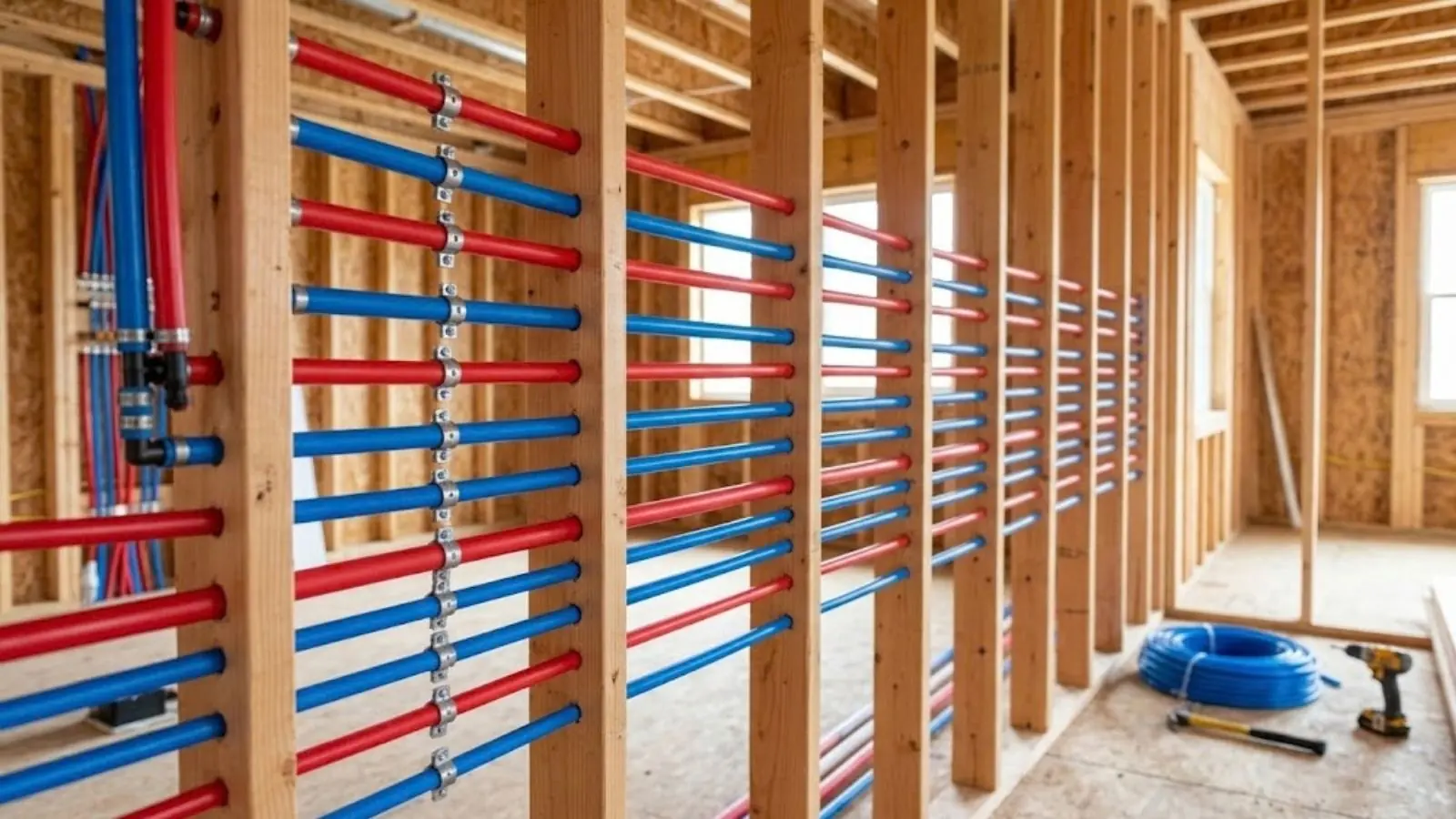
What repiping means for an older building
Repiping is the planned replacement of the water supply pipes inside a building, from the main valve to the fixtures. It is different from fixing one leak, because the goal is to remove pipe that is wearing out everywhere. Licensed plumbers do this work, and a permit is part of the process. If you have a pipe that has already burst, call the 24/7 line for burst pipe repair instead of waiting.
Signs your supply pipes are failing
One sign alone may have a simple cause. Several together suggest the pipe walls are thinning.
- Water that runs brown, orange or rust-colored when you first open a tap.
- Low pressure that has gotten worse over months, especially at upper floors.
- More than one pinhole leak on the same line, or leaks that keep returning after repairs.
- Discolored or metallic-tasting water, or stains on fixtures.
- Green crust or white mineral build-up on exposed copper or steel.
Galvanized pipe replacement
Galvanized steel was a common supply pipe in older buildings. It is zinc-coated steel, and over decades the coating wears and rust builds inside the bore. The pipe narrows, pressure drops and rust flakes can reach your faucets.
A galvanized line often fails from the inside out, so it can look fine from the surface. Replacement is usually the sensible answer once pressure falls and leaks appear, because patching one section leaves the rest to fail. We start by checking what pipe is actually in your walls.
Copper or PEX: trade-offs
Both materials are widely used for supply lines. The better choice depends on the building, the wall access and your budget for opening walls.
| Factor | Copper | PEX |
|---|---|---|
| Install in finished walls | Needs more cutting, joints and heat or press tools | Flexible, so it often snakes through walls with fewer openings |
| Joints | Many fittings, each one a possible leak point | Fewer fittings on long runs |
| Heat and fire exposure | Handles high heat | Not for use near sources of high heat and not left in direct sunlight |
| Repair later | Cut and couple a section | Cut and join with approved fittings |
| Water quality sensitivity | Can pit in some water conditions | Not affected by corrosion |
| Appearance if exposed | Traditional metal look | Plastic, so it is usually hidden |
Neither is always right. We explain what each costs in labor and wall openings for your building. If the water arriving at your meter seems poor, ask Veolia for its annual water quality report before choosing a pipe material.
Repiping in occupied multi-unit buildings and brownstones
Union City is one of the most densely packed municipalities in New Jersey, and its older buildings often have tenants on every floor. A repipe here is a phasing job. The plumber shuts off a riser or a floor at a time, so most tenants keep water during most of the day.
That means coordinating with the owner and the super well before the work starts. Tenants need notice of each shutoff, units below need access if the work is in a ceiling, and the owner needs a plan for opening and closing walls. A plumber does not patch or paint plaster, so budget a second trade for the finish.
Brownstones and two-family houses may let you repipe one apartment at a time. Larger buildings with shared risers usually need the whole riser replaced, and the plan is built around shutting that one line. If a lot of units share a stack, the plumber maps which fixtures lose water on each shutoff.
Permits and inspections
Replacing supply piping is not routine maintenance. New Jersey's Uniform Construction Code requires a construction permit for plumbing work on existing buildings, and inspections follow. For a one or two family house, a midpoint inspection covers rough piping and a final inspection covers the finished work. Ask the Union City construction office what your project needs, including who files the application.
Lead service lines and the street connection
The pipe from the street to your meter is the service line, and it is separate from the pipes inside the building. New Jersey law, signed in July 2021, requires utilities to replace lead service lines on a 10-year timeline. Ask Veolia, the water provider, what material your service line is.
We do not say any specific Union City line is lead. If Veolia replaces the street side, it makes sense to look at the building side while the trench is open. For a suspected buried leak, leak detection can confirm before you plan any replacement.
Partial repipe or whole-building repipe
A partial repipe replaces one riser, one bathroom group or the failing run only. It costs less, leaves other pipes in place and suits a building where only one section is worn. A whole repipe replaces everything and suits buildings where leaks keep appearing on different floors. The plumber looks at the pipe, the leak history and the age of the fixtures, and then recommends one or the other.
What to prepare before the plumber starts
- Tell tenants the dates and times when water will be off, and give them a contact for questions.
- Clear access to bathrooms, kitchens, utility closets and the basement shutoff.
- Move belongings away from walls, ceilings and pipe chases.
- Decide who will patch and paint, and schedule them after the plumber and the inspection.
- Ask the Union City construction office whether a permit is needed and who files it.
What repiping costs
Repiping prices vary widely, and we state a clear price before work starts. These factors set the total:
Insurance rarely pays to replace worn pipe, since age and corrosion are maintenance. It may help with sudden water damage that a burst pipe caused, so keep photos and invoices. We do not offer financing on this page, and any payment arrangement is discussed by phone.
Want your real number? Call and describe the job.
Call (551) 249-3045How a repiping project runs
Planned repiping takes more than one visit in most buildings.
Call and describe
Tell dispatch about the pipes, the leaks and the building so the right plumber is booked.
Inspect and plan
The plumber checks the pipe material, access points and shutoffs, then explains the options.
Phase the work
Shutoffs are set with the owner and tenants, and the old pipe is replaced section by section.
Test and inspect
Pressure testing, the inspection and a final check close out the job.
Ready to plan a repipe?
Call (551) 249-3045 and a dispatcher will book a licensed plumber to look at your pipes. For a flood or an active burst, the 24/7 line is the faster route.
Related work and nearby service
New piping often goes in with fixture changes, so see plumbing installation for the remodel side. A pipe that has failed once may also be worth a faucet repair check for old stop valves. We work in West New York, where older multi-unit buildings follow the same planning steps.
Repiping questions in Union City
Rusty water, falling pressure, and repeated pinhole leaks are the usual signs. A plumber can inspect exposed sections and test pressure before recommending replacement.
It is not an emergency by itself, but it wears from the inside. Rust narrows the bore, reduces flow and can release flakes into the water.
Both work. PEX can mean fewer wall openings, and copper offers heat tolerance. The plumber recommends one after seeing your walls and access.
Usually yes for most of the day. Work is phased so only one riser or floor is off at a time, and tenants get notice of each shutoff.
Plumbing work on an existing building needs a construction permit under the state code. Ask the Union City construction office what applies to your project.
Ask Veolia what your line is made of. New Jersey law requires utilities to replace lead service lines on a 10-year timeline.
In a two-family house or brownstone that is often possible. In a larger building, shared risers usually mean replacing the full riser.
No. Plumbers open the walls only as needed and leave them ready to patch. A separate contractor handles plaster, drywall and paint.
Still have a question? A dispatcher answers around the clock.
Call (551) 249-3045Public sources behind repiping
According to these official pages, the rules and safety steps mentioned here apply in New Jersey. Check them for your own address, since rules can change.
- New Jersey Department of Community Affairs, Uniform Construction Code general information: permit and inspection rules for plumbing work on existing buildings.
- NJ Division of Consumer Affairs, State Board of Examiners of Master Plumbers FAQ: who may perform plumbing work and what a licensed business must display.