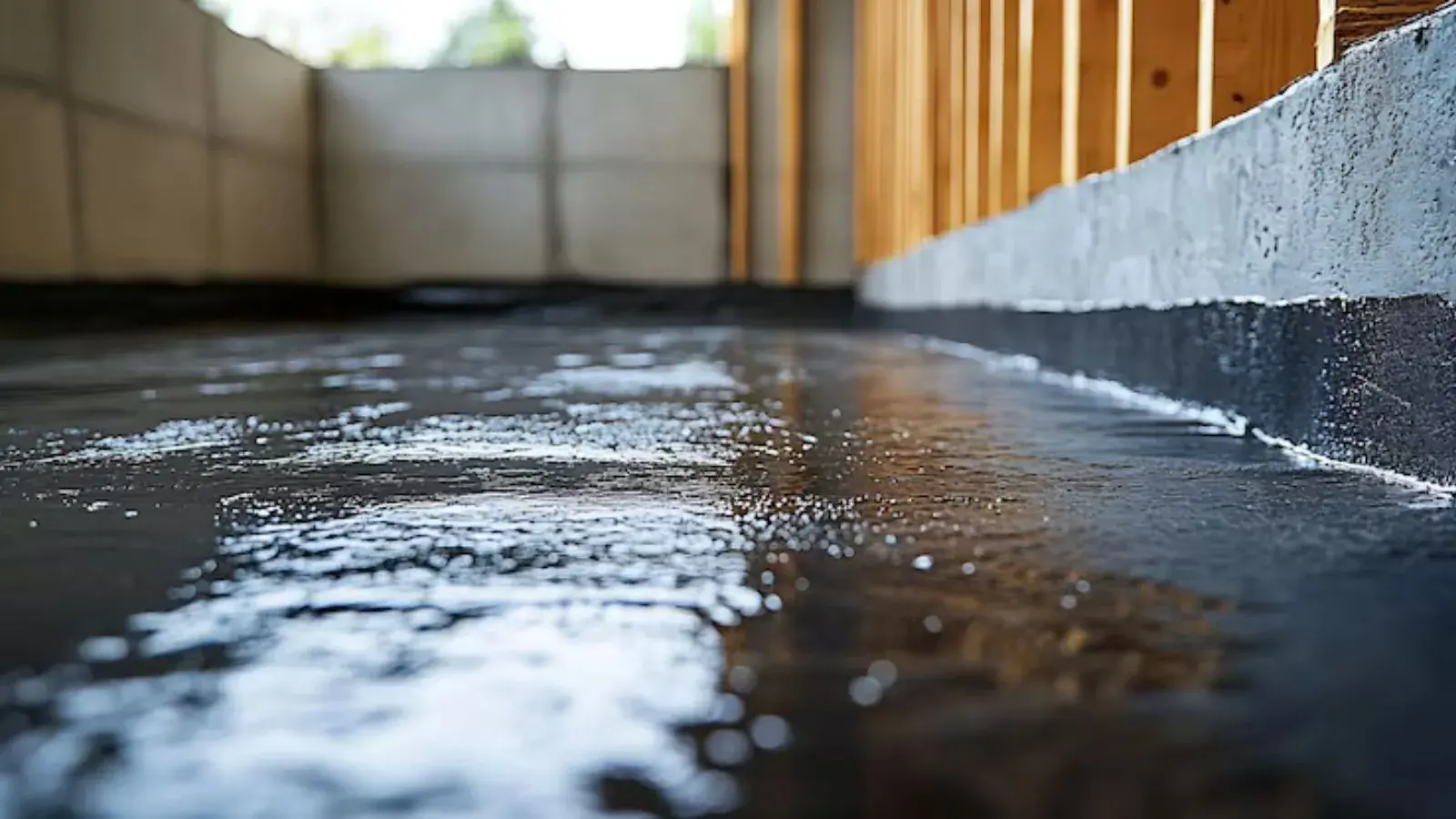
Where basement water comes from
Basement waterproofing in Union City starts with a question: where is the water coming from? Groundwater pressing through the floor, seepage through a masonry wall and a failed floor drain look alike on a wet floor. A leaking supply pipe or a cracked drain line can look like all three.
Plumbing is the first thing to rule out, because it is cheap to check and fixes the problem fast. If the plumbing is dry, the cause is the ground or the structure.
How to tell the sources apart
The timing of the water tells you more than its location.
- Groundwater: damp or wet floor after heavy rain, often along the floor-wall joint, and clear water.
- Wall seepage: dark streaks or white mineral crust on the masonry, and moisture on the wall face.
- Floor drain backup: dark, smelly water that rises from the drain, often at the same time as other drains gurgle.
- Plumbing leak: water that shows up on a dry day, near a pipe, water heater or washing machine.
- Humidity: a musty smell and beads of moisture on cold pipes, but no actual pooling.
A plumber can run a simple test. Shut off the main water, read the meter and see whether it moves. A moving meter points to a leak, which belongs under leak detection.
Local backing: dense buildings and a combined sewer
We state this plainly: we do not hold flood data for individual streets in Union City. What we can say is that the city is dense, with many older attached buildings, and that many have basements. The North Hudson Sewerage Authority runs a combined sewer here, so storm runoff and household waste share pipes and heavy rain can fill the public line.
Nearby Hoboken has streets below sea level that flood in heavy rain, and Union City sits higher on the Palisades. The practical point is the same: a basement that stays dry on a normal day may still need a drain, a pump or a valve for the worst storm.
Interior drain channels and sump systems
Interior drainage is the part of waterproofing a plumber installs. A channel along the floor-wall joint catches water that enters at the edge and sends it to a sump pit, and a pump lifts it out through a discharge line. It manages water that is already there instead of stopping it at the wall.
The system needs a sound pit, a working check valve and a place for the discharge to go. For pump details, see sump pump installation and repair.
Why outside excavation is hard on attached buildings
Exterior waterproofing digs down along the foundation and seals the outside wall. On a row house, brownstone or two-family with a neighbor against each side, there may be no yard to dig in. Sidewalk work may involve the city, and shared walls may mean you can only treat part of the foundation.
That is why many owners here choose interior drainage. Whether exterior work is possible for you is a question for a waterproofing contractor who can inspect the lot.
What we do and what we do not
We handle drains, sump pits and pumps, backwater valves and leak tracing. Masonry crack repair, exterior membranes and structural work are specialty trades. A good plumber says that up front and refers you on instead of pretending otherwise.
| Option | What it does | Who handles it | Limit |
|---|---|---|---|
| Interior drainage channel | Collects water at the floor-wall joint | Plumber | Manages water, does not seal the wall |
| Sump pump | Lifts collected water out of the pit | Plumber | Needs power or a battery backup |
| Backwater valve | Blocks sewage from flowing back in | Plumber | Needs access and occasional cleaning |
| Exterior membrane | Seals the outside foundation wall | Waterproofing contractor | Needs excavation, hard on tight lots |
| Masonry crack repair | Seals cracks in walls or slab | Masonry or waterproofing contractor | Repairs a symptom, not the groundwater |
| Dehumidifier | Lowers humidity | Homeowner | Does nothing for actual water |
Humidity or actual water
Many basements are damp without being wet. Cold pipes sweat, a clothes dryer vents into the room or a bathroom fan has no outlet, and the air carries moisture to the walls. Tape a square of plastic wrap to the wall for a day. Moisture on the room side means humidity, and moisture under the plastic means the wall is leaking.
Permits before you dig or drill
Interior drains and new pump pits cut into the floor and tie into drain lines, which the state construction code may treat as permitted work. Ask the Union City construction office what your project needs. We tell you what the plumbing side of the job involves.
Planning before storm season
Do not wait for the first heavy rain to find out the pump is dead. Test the sump pit by pouring in water, clear the floor drain and ask a plumber to check the backwater valve. If you rent, send the landlord a written note now, with photos of any past water.
Raise stored items off the floor and keep drains and discharge lines free of debris.
What basement waterproofing plumbing costs
Cost depends on what the diagnosis finds. We give a clear price before work starts, once the plumber has seen the basement.
Insurance often excludes groundwater seepage and sewer backup unless you have a rider. Ask your insurer first, and keep dated photos and the plumber's report.
Want your real number? Call and describe the job.
Call (551) 249-3045How the work goes
Same-day appointments are available when a plumber is free.
Call and describe
Tell dispatch where and when the water appears.
Rule out plumbing
The plumber checks supply lines, drains, the meter and the heater.
Plan the fix
You hear the plumbing options and where a specialist is needed.
Install and test
Drains, pit, pump or valve are set and tested with water.
Wet basement?
Call (551) 249-3045. Dispatch answers 24/7 and can book a plumber to find out whether it is a pipe, a drain or the ground.
Related plumbing help
If the water came up a drain, read about sewer line cleaning. Basements across North Bergen and Union City share many of the same concerns.
Basement water questions
A plumber handles the drains, sump, backwater valve and any leaking pipes. Wall sealing and exterior membranes belong to a waterproofing contractor.
Shut off the main and watch the meter. If it moves with everything off, a pipe is leaking.
Only for humidity. It does not remove water that seeps in from the ground or backs up from a drain.
Ask the Union City construction office. New drain lines and pits can fall under the state construction code.
On attached buildings there may be little room, and neighbors or the sidewalk get in the way. A specialist can judge your lot.
Before a storm, not during one. Test the pump, clear the drains and check the backwater valve.
Still have a question? A dispatcher answers around the clock.
Call (551) 249-3045Public sources behind basement waterproofing
According to these official pages, the rules and safety steps mentioned here apply in New Jersey. Check them for your own address, since rules can change.
- New Jersey Department of Community Affairs, Uniform Construction Code general information: permit and inspection rules for plumbing work on existing buildings.
- NJ Division of Consumer Affairs, State Board of Examiners of Master Plumbers FAQ: who may perform plumbing work and what a licensed business must display.
- North Hudson Sewerage Authority, about the system: the towns it serves and its combined sewer network.