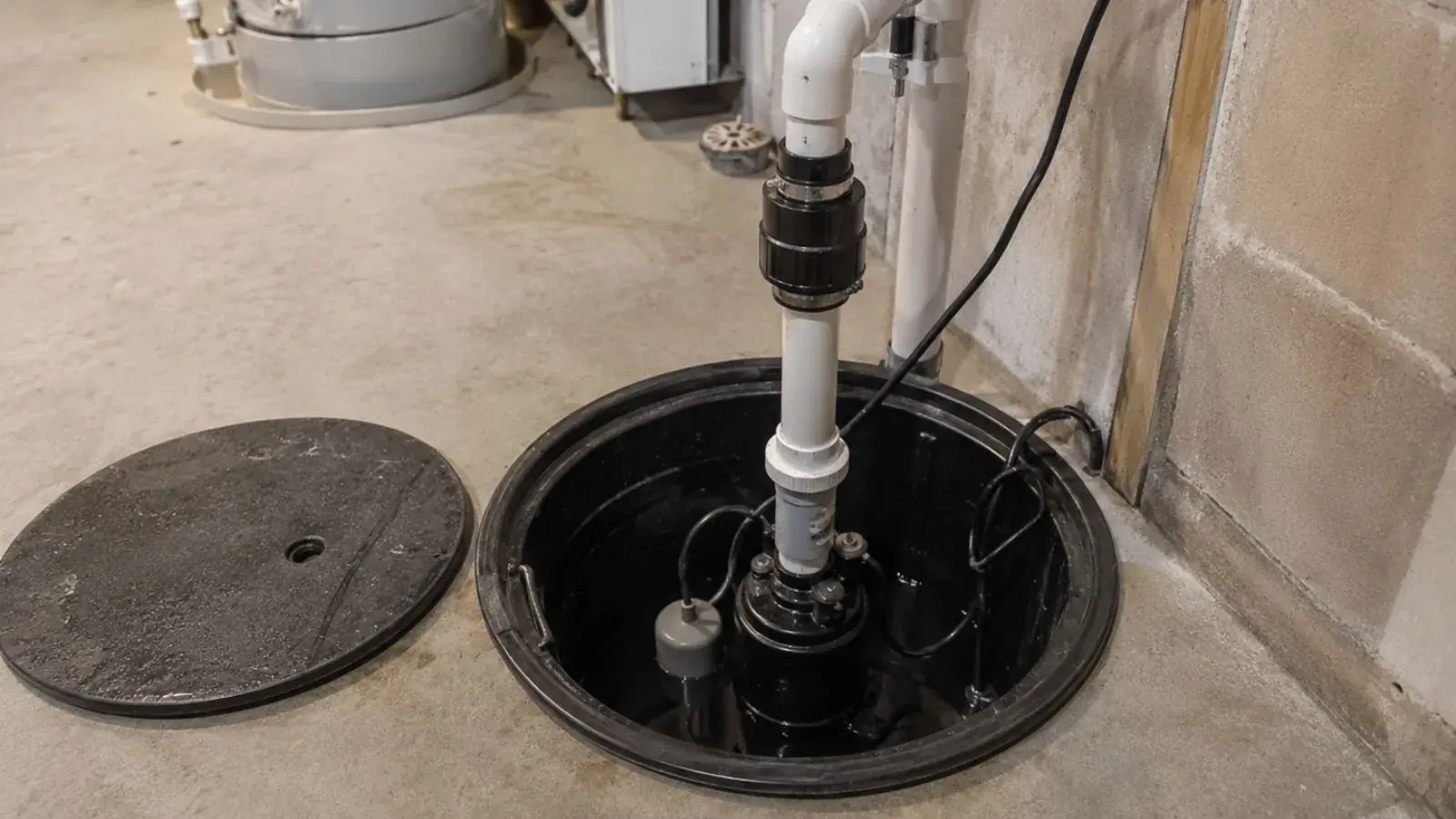
Sump pump failed and the pit is filling: what to do first
A sump pump sits in a pit in the basement floor and pushes groundwater out of the building. When it stops, the pit fills, then the floor. Our dispatch line is open 24/7, including storm nights, and we book same-day appointments when a plumber is free.
While you wait, keep people and pets out of standing water, because a basement outlet or extension cord can make that water live. Cut power at the panel only if you can reach it without stepping into water. Lift stored boxes onto shelves. If the pump hums but moves nothing, unplug it only when the outlet is dry and you are not standing in water.
Here is the honest local picture. Many Union City buildings are dense and attached, and many have basements. The North Hudson Sewerage Authority runs a combined sewer here, where storm runoff and household waste share pipes, so heavy rain can fill the public line. Whether your water comes from the ground or from the sewer decides what fixes it.
What a sump pump does, and what it does not
A sump pump handles groundwater and seepage, not sewage. It collects water in a pit and lifts it out through a discharge pipe, with a float switch that turns the motor on when the level rises. If the water in your basement smells like a drain or is dark, that is a sewer problem, and the pump is not the answer.
Signs the pump is failing
A pump rarely fails without warning. These signs show up first.
- It runs constantly, even in dry weather, which often means a stuck float or a pump too small for the inflow.
- It will not start when the pit is full, so the switch, cord or motor may be dead.
- It makes grinding, rattling or screeching noise from a worn bearing or debris in the impeller.
- Water stands in the pit with no cycling at all.
- The pump cycles on and off every few seconds, a sign the check valve is not holding.
Sump pump or ejector pump
An ejector pump is a different machine. It handles wastewater from a basement bathroom, laundry or utility sink that sits below the street sewer, and it lifts that waste up to the building drain. It sits in a sealed basin with a vent, and its job is solids, not groundwater.
If you finish a basement with a toilet or washer, you need one. A failing ejector shows up as slow drains, gurgling or a sewage smell near the basin, and the repair is a plumber's job.
| Pump type | Handles | Typical use | Note |
|---|---|---|---|
| Submersible sump | Groundwater | Pit in the basement floor | Quiet and common |
| Pedestal sump | Groundwater | Pit with motor above the water | Easier to reach, louder |
| Battery backup sump | Groundwater when power fails | Second pump in the same pit | Needs a charged battery |
| Sewage ejector | Wastewater and solids | Basement bath or laundry | Sealed and vented basin |
| Grinder pump | Wastewater, ground into slurry | Small-bore discharge lines | Used where a standard ejector does not fit |
Battery backup and the check valve
Storms often cut power at the very moment a pump is needed. A battery backup pump sits beside the main pump and takes over when the grid drops or the main motor fails. Test the battery and the float every few months and replace the battery on the maker's schedule.
The check valve on the discharge pipe stops water from flowing back into the pit after each cycle. A stuck valve makes the pump cycle every few seconds, and a quiet clack means it is working.
Backwater valve for sewer backup
If the water in your basement comes up the floor drain, the sump pump cannot help. A backwater valve is a flap in the building drain that closes when sewage tries to flow the wrong way. A plumber installs it in the line, and it needs access and an occasional cleaning to stay working.
Hoboken's Sandy flood in 2012 reached about 1,700 homes and shows what happens when water meets low basements. Union City sits on the Palisades ridge, a different setting, but the lesson holds here: check your pump, your backup and your drain before the storm.
Where the plumber stops and the waterproofing contractor starts
We work on pumps, discharge lines, ejector basins, drains, backwater valves and leak tracing. Cracked foundation walls, exterior membranes and masonry sealing belong to a waterproofing contractor. If the pump keeps up but the basement stays damp, read about basement waterproofing for how the two trades divide the work.
What sump and ejector pump work costs
Price depends on the pump and the pit. We give a clear price before work starts, after the plumber sees the basement.
Homeowner insurance often excludes groundwater or sewer backup unless you bought a rider. Ask your insurer before you clean up, and keep photos and the invoice.
Want your real number? Call and describe the job.
Call (551) 249-3045What happens when you call
Many repairs are float or check valve swaps.
Describe
Tell dispatch if the pump hums, runs or is silent, and whether the water is clear.
Dispatch
The next open plumber is booked, same day when available.
Diagnose
The plumber checks the float, cord, check valve and discharge.
Repair or replace
You hear the options and the price before work starts.
Pump down in the rain?
Call (551) 249-3045. We answer 24/7, so a midnight storm is no reason to wait for morning.
Related plumbing work
Hidden leaks can mimic seepage, so a leak detection visit rules out a broken supply line. A main line backup is a job for sewer line cleaning. Neighbors in Hoboken face the same combined sewer and ask us the same questions.
Sump pump questions
Yes. Dispatch is open around the clock and we book same-day appointments when a plumber is free. Say whether the pump hums or is silent when you call.
A stuck float, a failed check valve or a leaking supply line can keep it cycling. A plumber can tell which by watching a cycle.
It varies with use and water quality. A pump that is loud, slow or cycling oddly is worth checking before it fails.
No. A sump pump moves groundwater. Sewer backup needs a backwater valve or a cleared line.
Ask the Union City construction office. A pump replacement may be treated differently from a new ejector installation.
Still have a question? A dispatcher answers around the clock.
Call (551) 249-3045Public sources behind sump pumps
According to these official pages, the rules and safety steps mentioned here apply in New Jersey. Check them for your own address, since rules can change.
- New Jersey Department of Community Affairs, Uniform Construction Code general information: permit and inspection rules for plumbing work on existing buildings.
- NJ Division of Consumer Affairs, State Board of Examiners of Master Plumbers FAQ: who may perform plumbing work and what a licensed business must display.
- North Hudson Sewerage Authority, about the system: the towns it serves and its combined sewer network.