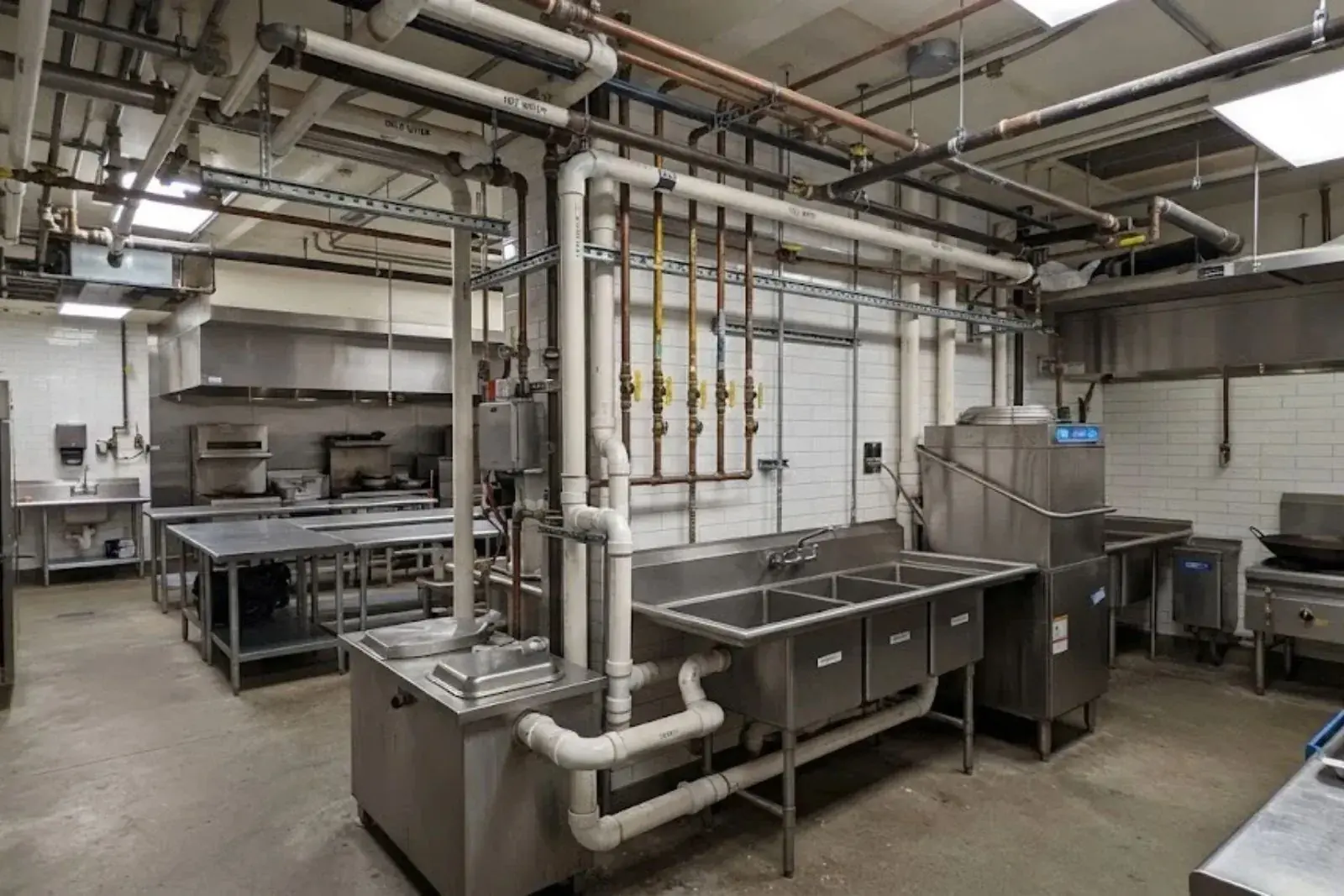
Commercial plumbing emergency after hours: what to shut off
Commercial plumbing covers the pipes, drains and fixtures in shops, restaurants, offices and the ground-floor spaces of mixed-use buildings. When one fails after closing, the clock matters because water travels down. Our dispatch line is open 24/7, and we book same-day appointments when a plumber is free.
While you wait, close the shutoff for the affected fixture or the main valve for the space, stop using sinks and toilets, and unplug equipment standing near water. Turn off power only if you can reach the panel without stepping into water.
Bergenline Avenue has been the main commercial street since the early 1900s, and it runs the length of the city. Many storefronts sit under apartments, which means a failed drain or supply line at street level can reach a tenant above or a basement below. Tell dispatch who else shares the stack so the plumber arrives ready.
Who to call and what to tell them
Roles matter in a leased space, and a clear first call saves an hour.
- Tenant: shut off the valve you control, then reach the landlord or manager the moment water is moving.
- Landlord or manager: confirm who owns the line, because a shared stack or main may be the building's, not the shop's.
- Dispatch: give the address, the floor, the fixture and whether other units are wet.
- Neighbors: warn the apartments above and below if water is dripping through a ceiling.
Grease trap cleaning for kitchens
A grease trap or interceptor catches fat and food solids before they reach the building drain. When it fills, the kitchen sink backs up, the dishwasher drains slowly and a sour smell rises from the floor. Cleaning means pumping the contents, scraping the walls and baffles, and checking that the inlet and outlet flow freely.
How often you need it depends on volume, and busy kitchens fill traps faster than a small counter-service shop. Ask the Union City construction office or the North Hudson Sewerage Authority whether any rule applies to your kitchen, and keep the haul-away paperwork.
If the trap is clean but the line still clogs, the grease may have coated the pipe beyond it. That is the job for hydro jetting, which scours the pipe wall instead of punching one hole.
Backflow testing, planned and on schedule
A backflow preventer keeps dirty water from flowing backward into the drinking supply. Restaurants, car washes, buildings with fire sprinklers and some irrigation lines use one, and the device needs testing on a schedule.
Ask Veolia or the Union City construction office which devices on your property require testing and how often. Book the test ahead of time, because a failed device must be repaired before you can file the result.
Storm drain cleaning
Roof drains, area drains and trench drains fill with leaves, paper and grit. When a downpour hits, a clogged drain sends water into the doorway. The North Hudson Sewerage Authority runs a combined sewer, so heavy rain can also slow the public line, and a camera shows whether the block is on your side.
Commercial leak detection
Finding a leak in a business takes access. A plumber may need the ceiling of the tenant below, the back of a restroom wall or a time after closing when water can be shut off for testing. In a multi-tenant building, we ask the manager to coordinate access and who pays.
Tools are the same as at home: acoustic listening, pressure tests and thermal imaging. If you only suspect a hidden leak, leak detection explains the process, and a sudden break is a call for burst pipe repair.
Commercial drains and hydro jetting
Drains in a restaurant or salon clog faster than a home line because of volume. Drain cleaning clears a blockage, and jetting follows when the pipe wall holds scale, grease or roots. If the same line clogs every few weeks, a camera run tells you whether to clean on a schedule or repair the pipe.
Restrooms and fixtures for small businesses
Customers judge a business by its restroom, so a toilet that runs or a sink that drips costs more than water. Flush valves, faucets, urinals and supply stops are the usual repair items. Commercial toilets use a different flush mechanism from residential ones, and the plumber brings the right parts.
| Common call | First step | Then |
|---|---|---|
| Restroom overflowing | Close the toilet stop and stop using the room | Clear the branch line and check the floor drain |
| Kitchen sink backing up | Stop the dishwasher and sinks | Check the grease trap, then the line beyond it |
| Water through the ceiling below | Shut off the main for your space | Trace the supply or drain above and call the manager |
| Floor drain smells or gurgles | Pour water into the trap to refill it | Camera the line if the smell returns |
| Roof or area drain blocked | Clear loose debris you can reach | Cable or jet the drain line |
Keeping records that help later
Keep invoices, trap-pumping slips, backflow test reports and dated photos of any water damage. Landlords, insurers and inspectors ask for them, and a clean file shortens every dispute. When a lease says who owns which pipe, store that page with the plumbing records.
What commercial plumbing costs
A business job is priced by scope, access and hour, not a flat list. We give a clear price before work starts.
A business policy may cover sudden water damage but not wear or neglect. Photograph the damage, call your insurer before cleaning up and keep every invoice.
Want your real number? Call and describe the job.
Call (551) 249-3045What happens when you call
We ask for the manager's name so someone can open the space.
Report
Give the address, the floor, the fixture and who else is affected.
Book
We send the next open plumber, same day when one is free.
Stop and fix
The plumber isolates the water, clears or repairs the line and tests flow.
Document
You get an invoice and notes to pass to the landlord or insurer.
Business plumbing emergency?
Call (551) 249-3045. We answer 24/7, so a Saturday night kitchen flood gets the same call as a Monday morning one.
Nearby business districts
Bergenline Avenue also runs through West New York, where shops and restaurants face the same shared stacks and storefront-under-apartment layouts. Both towns use the same combined sewer, so the storm-drain advice above applies there as well.
Commercial plumbing questions
Yes. Dispatch answers 24 hours a day, and we book same-day appointments when a plumber is free. Tell the dispatcher about standing water or an overflowing restroom so the call goes first.
It depends on your lease and which pipe failed. The plumber documents the cause, and you pass that report to the landlord and your insurer.
It depends on kitchen volume and trap size. A busy restaurant needs it more often than a small shop, and a slow drain or sour smell is a sign it is overdue.
Ask Veolia or the Union City construction office. They can tell you which devices on your property need testing and how often.
Yes. For planned jobs such as testing, jetting or fixture replacement, we schedule before opening or after closing.
Call the landlord or manager and then call us. We can trace whether the leak comes from the upstairs supply, drain or a shared stack.
Still have a question? A dispatcher answers around the clock.
Call (551) 249-3045Public sources behind commercial plumbing
According to these official pages, the rules and safety steps mentioned here apply in New Jersey. Check them for your own address, since rules can change.
- New Jersey Department of Community Affairs, Uniform Construction Code general information: permit and inspection rules for plumbing work on existing buildings.
- NJ Division of Consumer Affairs, State Board of Examiners of Master Plumbers FAQ: who may perform plumbing work and what a licensed business must display.
- North Hudson Sewerage Authority, about the system: the towns it serves and its combined sewer network.