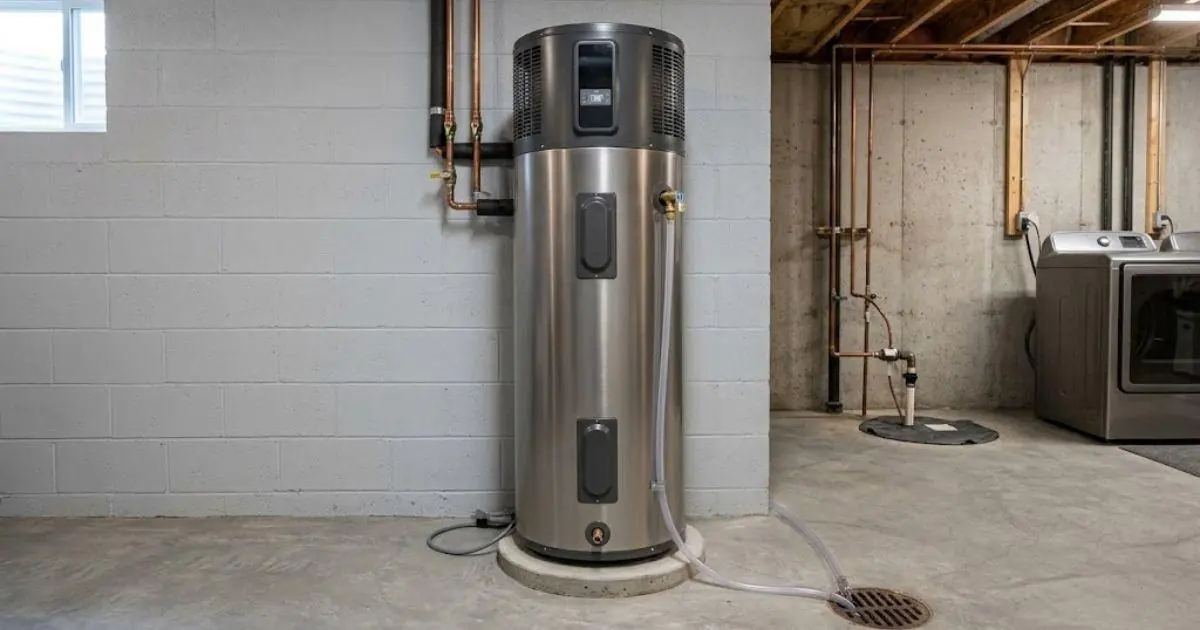
What a heat pump water heater is, and why the install costs what it does
A heat pump water heater, also called a hybrid, moves heat from the surrounding air into the tank instead of making it only with a burner or a heating element. It is built like a standard tank with a heat pump unit on top, and it plugs into electricity.
The unit costs more than a basic tank, and the installation brings extra items: an electrical circuit, room to breathe, and a drain for condensate. We do not publish dollar figures, because the total depends on your space and your panel. We give a clear price before work starts.
The cost drivers, one by one
The unit price is the largest single item, and the capacity you choose changes it. Beyond the unit, the parts and labor around it add up differently in every building.
The list below covers what a quote should address. If a line is missing from a quote, ask whether it is included or will be added after the work begins.
- The unit itself, chosen to match hot water use in your household.
- The electrical circuit, which must be sized for the unit and may need new wiring from the panel. That is electrician work, and a plumber will coordinate it with a licensed electrician.
- Space and airflow, because the unit needs room around it and cool air to draw heat from.
- A condensate drain, since the unit makes water as it pulls heat from the air.
- Removal of the old gas or electric tank, including disconnecting and capping fuel lines.
- An expansion tank and a temperature and pressure relief valve with a discharge pipe.
- A permit and any inspection that follows.
Where a heat pump water heater does not fit
These units are taller than many standard tanks and need clear space around them. A small closet with no airflow can starve the unit of air, which makes it work harder and can leave the room cold. A louvered door or ducting sometimes fixes this, but not in every closet.
Placement also affects noise. The fan and compressor make a hum, so a unit next to a bedroom wall is a poor fit. A plumber can look at the space and tell you if the unit will work or if another type suits it better.
| Fit factor | What to look for | If it is missing |
|---|---|---|
| Floor space | Room for a taller tank with clearance on all sides | Ask about a smaller capacity or another type of heater |
| Airflow | An open basement or ducted space with cool air | A closed closet may need louvers or ducting, or may not suit the unit |
| Electrical panel | A spare breaker slot and capacity for a new circuit | An older panel may need work by a licensed electrician first |
| Condensate drain | A floor drain or a place to run a drain line | A condensate pump may be needed |
| Ceiling height | Enough overhead for the unit and its connections | A low ceiling can rule out some models |
| Noise tolerance | A spot away from sleeping rooms | Consider another location or heater type |
How it compares to gas and conventional electric
A heat pump unit generally costs more to buy and install than a conventional electric tank or a gas tank. In return it uses much less electricity than a standard electric element to make the same hot water, so running cost can be lower for some homes.
Compared with gas, the picture depends on what you pay for gas and electricity and how much hot water you use. We cannot give your running cost, so ask for estimates based on your own bills. Our water heater replacement page covers the like-for-like swap, and the tankless water heater page covers the other high-efficiency route.
Rebates and incentives: ask, do not assume
Rebates and incentives for heat pump water heaters exist in some places. We cannot verify which programs apply to your address, how much they pay or whether they are open.
Ask your electric utility and the state energy programs before you buy, and ask whether a rebate requires a certain model or a pre-approval step. Get any rebate terms in writing before you rely on them.
Switching from gas: what changes
Moving from a gas tank to a heat pump unit removes the burner, the gas connection and the flue. The gas line must be shut off and capped safely, and the old vent may be left unused or removed.
That can simplify the vent question, but it brings the electrical and drain items above. A plumber and an electrician should confirm the plan together before the old unit comes out.
Local note: older panels and tight basements
Union City is dense, with 26,455 housing units in about 1.29 square miles, and many are in older buildings. In older buildings, the electrical panel can be small or already full, so a new circuit for a heat pump unit may need panel work. Ask a licensed electrician to check the panel before you buy, and ask the landlord or board first if the panel is shared.
PSE&G supplies gas and electric in this area. If you smell gas at any point during a switch, leave the building, move at least 350 feet away, and call PSE&G at 1-800-880-PSEG (7734) or 911. The permit rules apply to this work, so ask the Union City construction office what your project needs. Basements can be tight, so measure the space and the stair path before you pick a model.
Insurance, tenants and who decides
Insurance usually covers sudden damage, not the replacement of a heater that wore out. If you rent, the landlord or the building decides on the equipment and pays for it, so raise the idea with them first.
If you are buying or managing a building, plan the switch when the old heater is still working. That gives you time to check the panel and space without losing hot water.
Where we work
We install water heaters across Hudson County, including Weehawken and West New York. Dispatch is open 24/7, and same-day appointments are offered when available.
For the full range of options, see our water heater installation page, which covers gas, electric and the other unit types we install.
Want to know if a heat pump unit fits your space?
Call the 24/7 line and describe the space and the panel. A plumber will explain the options and give a clear price before work starts.
Heat pump water heater questions
Often, if the space is open enough to give the unit air. A cramped or closed basement corner may not work.
Usually yes, sized for the unit. A licensed electrician should check the panel and run any new wiring.
The unit makes condensate as it works, so it needs a drain line, a floor drain or a small pump.
Programs exist in some places, but we cannot verify specifics for your address. Ask your electric utility and the state energy programs.
It depends on the panel's spare capacity. Older panels may need work first, so have a licensed electrician look before you buy a unit.
Public sources behind this guide
According to these official pages, the rules and safety steps mentioned here apply in New Jersey. Check them for your own address, since rules can change.
- New Jersey Department of Community Affairs, Uniform Construction Code general information: permit and inspection rules for plumbing work on existing buildings.
- NJ Division of Consumer Affairs, State Board of Examiners of Master Plumbers FAQ: who may perform plumbing work and what a licensed business must display.
- PSE&G, what to do if you smell gas: the leave-first steps and the gas emergency line.