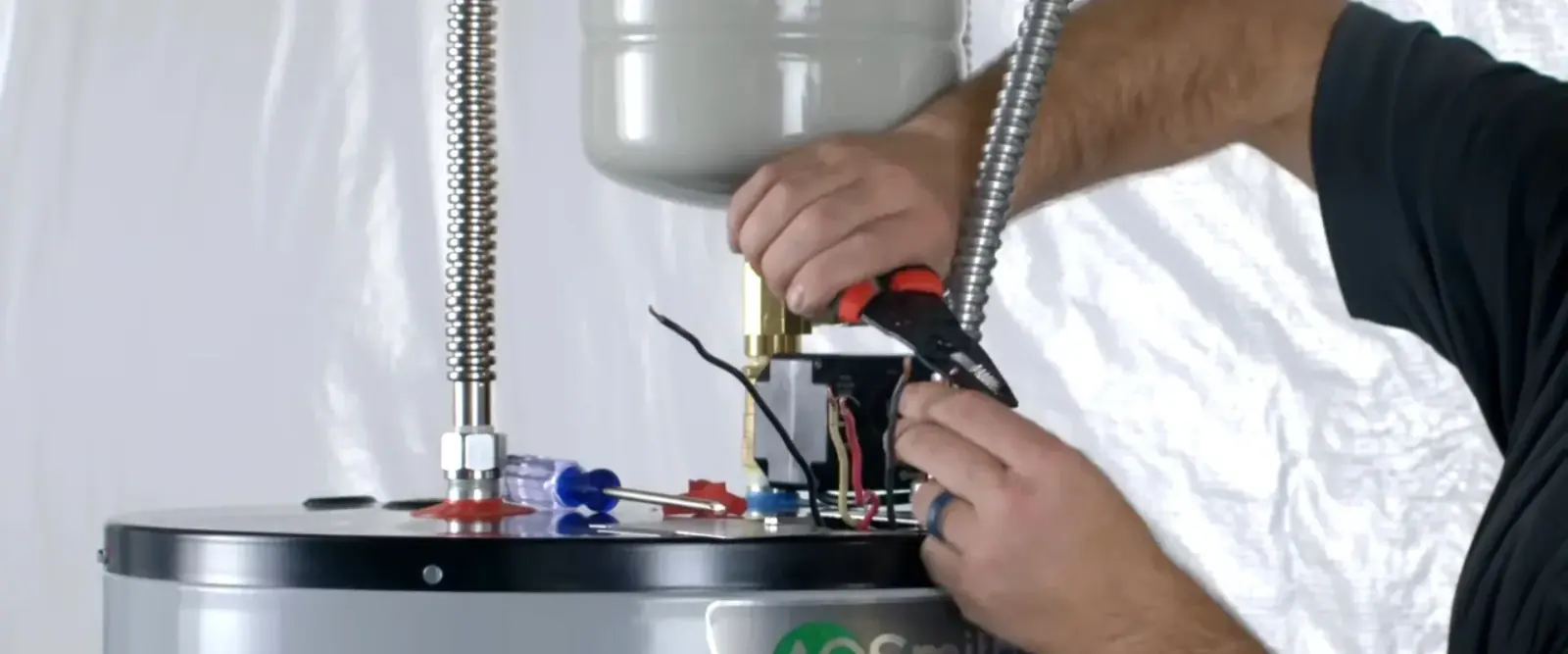
The short answer on gas water heater installation cost
The installed cost of a gas water heater is the unit plus the labor and parts that connect it safely, and the second half changes more than the first. Two homes can buy the same tank and receive very different totals because of venting, gas piping and access.
We do not publish dollar figures, because any number given before someone sees your basement or closet is a guess. We give a clear price before work starts. The rest of this post explains what is in that price, so you can compare two quotes on the same basis.
What a quote should include
A complete quote lists the new heater, the gas connection, the vent, the water connections, the safety parts, the permit and the removal of the old unit. If a line is missing, ask whether it is included or added later.
Many people compare only the tank price and the total. That hides what sits between them. Ask for the scope in plain words, and have each plumber confirm the same list before you choose.
| Cost driver | Why it matters |
|---|---|
| Tank size | A larger tank costs more to buy and may need more room, a stronger stand or a larger vent |
| Efficiency rating | Higher efficiency models cost more up front and often change how the unit vents |
| Venting changes | A new unit may need a different vent size, new liner or a short power vent, which adds parts and labor |
| Gas connection and shutoff | Old flex lines, missing shutoffs or a sediment trap that is absent must be corrected to current practice |
| Expansion tank | A closed water system often needs one, and it adds a part and a mounting point |
| Relief valve and drain | The discharge pipe must run to a safe spot, and a long run takes more pipe |
| Permit | Plumbing work on an existing building is usually permitted, and the paperwork takes time |
| Haul-away of the old unit | Removing a heavy tank from a basement takes labor and disposal |
| Access | A tight closet, steep stairs or a low ceiling slows the work |
| Time of day | Nights, weekends and holidays fall under emergency dispatch hours |
Tank size and efficiency
Tank size should match how many people use hot water at once, not how big the old tank was. A household with several showers and a washer in the same hour needs more capacity than a couple. Oversizing wastes energy keeping extra water hot all day.
Higher efficiency gas models cost more to buy, and they often change how the unit vents. That is why the model choice and the venting question belong in the same conversation.
Venting is the part that surprises people
A gas heater must send combustion gases outdoors, and the vent that served your old tank may not suit a new one. A vent that is too large, too small, corroded or sloped the wrong way can bring exhaust into the room.
Some units use a fan to push the exhaust through a smaller pipe, which can work where a chimney is unavailable. That adds an electrical outlet and a power vent unit to the job. A plumber should look at the existing vent before quoting, and a quote that ignores it is incomplete.
Gas connection, shutoff and safety parts
Every gas heater needs a shutoff valve within reach, a proper gas connector and a sediment trap on the gas line in many setups. Old connectors and missing valves are common finds when a unit is replaced.
On the water side, the heater needs a temperature and pressure relief valve with a discharge pipe that runs down toward a drain. An expansion tank handles pressure swings in a closed system. These parts are not optional extras, and a low quote may leave them out.
Do not skip the permit
The state construction code requires a permit for plumbing work on existing buildings, with an exemption for ordinary maintenance. Replacing a water heater is more than routine maintenance in most cases, so ask the Union City construction office what applies to your job.
A permit brings an inspection, and an inspection catches venting and gas mistakes. It also helps when you sell the building or file an insurance claim later.
Tank, tankless and hybrid: the shape of the cost
A standard gas tank has the lowest purchase price and the simplest install. A gas tankless unit costs more to buy and install, because it needs a larger gas line, a specific vent and sometimes a drain for condensate. It can lower operating cost for some homes and it takes less floor space.
A hybrid or heat pump unit costs more again and runs on electricity, so it suits a different set of homes. Our tankless water heater page explains that option in more detail, and the right choice depends on your gas line, your space and your hot water use.
Questions to ask every plumber before you accept a quote
- Does the price include the permit and the paperwork?
- Is the vent being reused, relined or replaced?
- Are the gas shutoff, connector and sediment trap included?
- Does it include an expansion tank and relief valve discharge pipe?
- Is removal and disposal of the old tank included?
- Does the price change if the work happens at night or on a weekend?
Local note: PSE&G gas and tight Union City basements
PSE&G supplies gas and electric in this area. If you smell gas, leave the building immediately and move at least 350 feet away. Do not use light switches or doorbells, do not start a car, and do not use a phone near the odor. From a safe distance, call PSE&G at 1-800-880-PSEG (7734) or 911. Reporting a gas leak costs nothing.
Union City packs 26,455 housing units into about 1.29 square miles, and many older buildings have basements with low ceilings and little clearance around the heater. Tell dispatch where the unit sits, how you reach it and whether anything stands between the stairs and the tank. A tight space can add time for moving the old unit out and the new one in, and it can limit which models fit.
Insurance and when replacement is the right call
Homeowner insurance usually covers sudden damage, such as a tank that bursts and floods a floor, but it does not pay to replace a heater that wore out. If water has already damaged your property, photograph it and call your insurer before cleanup.
If your tank is leaking from the body, repair is rarely an option, and our replacement work covers that case. If the unit is only failing to heat, a part may be at fault, and a plumber can tell you which it is before you commit to a new tank.
Where we work
We install and replace water heaters across Hudson County, including Hoboken and Weehawken, where older buildings bring the same venting and space questions. Tenants should tell the landlord first, because the owner decides on the equipment and pays for it.
Ready to price a gas water heater?
Call the 24/7 line, describe the current unit and where it sits, and a plumber will explain what the job involves.
Gas water heater cost questions
The tank is only part of it. Venting, gas parts, the permit, an expansion tank and removal of the old unit may be in one quote and missing from the other.
Often, but it changes the gas line and vent. A tankless unit draws more gas at once, so the line size and the exhaust path need checking first.
Plumbing work on an existing building generally needs one under the state construction code, with an exemption for ordinary maintenance. Ask the Union City construction office about your job.
A like-for-like swap is shorter than a job that changes the vent or gas line. A plumber can give you a realistic window after seeing the space.
Leave the building at once and move at least 350 feet away. Do not touch switches or use a phone near the odor. Then call PSE&G at 1-800-880-PSEG (7734) or 911, and call a plumber only after PSE&G clears the building.
Public sources behind this guide
According to these official pages, the rules and safety steps mentioned here apply in New Jersey. Check them for your own address, since rules can change.
- New Jersey Department of Community Affairs, Uniform Construction Code general information: permit and inspection rules for plumbing work on existing buildings.
- NJ Division of Consumer Affairs, State Board of Examiners of Master Plumbers FAQ: who may perform plumbing work and what a licensed business must display.
- PSE&G, what to do if you smell gas: the leave-first steps and the gas emergency line.