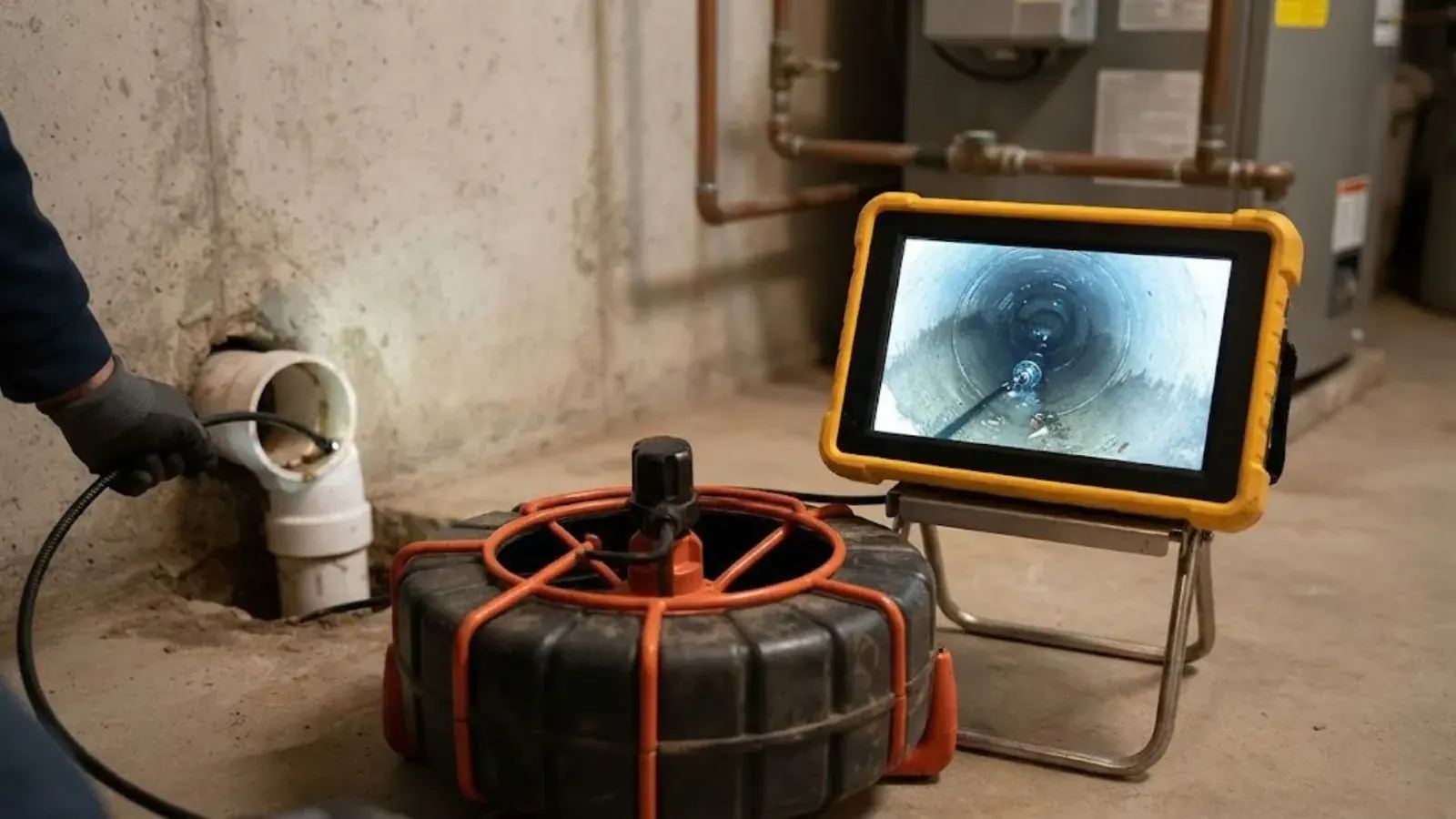
What a sewer camera inspection shows
A sewer inspection sends a waterproof camera through your drain line and records the picture. The plumber watches a screen as the camera moves toward the street and notes the distance to anything unusual. You come away knowing what shape the pipe is in, not guessing from symptoms.
The camera can reveal cracks, joints that have slipped out of line, roots that have pushed into a seam, grease and scale coating the wall, and bellies where the pipe sags and holds water. It also shows where the building line meets the public connection.
When to book an inspection
A camera pays off whenever the next step costs real money.
- The same drain or main has backed up more than once.
- You are buying a building and want the lateral checked before closing.
- A repair or relining is planned and you need exact locations first.
- Part of the yard, floor or sidewalk has sunk or a collapse is suspected.
- Gurgling, sewer smell or damp ground has no clear source.
Why Union City lines are worth a look
Union City has 26,455 housing units on about 1.29 square miles, many in attached buildings where a single lateral may serve several apartments. A crack or root problem in that shared pipe affects every household on it. Finding it on camera lets the owner plan one fix rather than a string of emergency calls.
Because so many buildings are older, ask whoever manages yours whether the line has ever been filmed. If there is no record, a first inspection creates a baseline that helps later when you compare condition year to year.
Buying or selling a building
A purchase is the best time to look inside the sewer line, because a hidden failure becomes the buyer's problem the day the deed changes hands. A recorded run gives the buyer facts to negotiate with and gives a seller a clean record to show.
The inspection covers the line you can reach from the cleanout. It does not replace a full building inspection, and it cannot tell you about the roof, wiring or foundation. Ask your attorney or agent how to include the recording in the contract timeline.
How to prepare for the visit
- Locate the cleanout (a pipe with a screw cap, often low on a basement wall or in a utility room) and clear a path to it.
- Move storage, bikes and boxes at least a few feet back so the plumber can kneel and feed the cable.
- Tell us how many apartments feed the line and which drain sits lowest.
- Stop heavy water use during the visit, such as laundry, so the pipe is as dry as possible.
- If the line is badly clogged, expect the plumber to clear it first, since grease and roots block the lens.
The recorded report and how to use it
The recording is a video of the pipe with distance marks. Watch it with the plumber and ask for the location of each defect measured from the cleanout. Those numbers decide whether the answer is hydro jetting, a spot fix or a full lining.
Keep a copy with your building records. It helps an owner decide on repair, a buyer compare offers and an insurer see when a defect first appeared.
| What the camera finds | What it usually means | Typical next step |
|---|---|---|
| Clean pipe, normal flow | The clog was a one-off or sits in a branch | No repair, routine care |
| Heavy grease or scale | Buildup narrows the pipe | Jetting and a prevention plan |
| Roots at a joint | The seam is open | Root cutting, then joint repair |
| Crack, offset or belly | Pipe damage | See sewer line repair |
What the camera cannot see
A camera sees the inside surface only. It cannot tell you how much soil has washed out around a crack, the condition of the pipe on the far side of a collapse it cannot pass, or what is happening behind a wall. If a blockage stops the camera, the plumber clears it or flags the spot and tells you where the picture ends.
A camera also does not find a leak in a supply line. For hidden water leaks use leak detection, which is a different set of tools.
Public sewer or private lateral
Your lateral is the pipe between the building and the street connection. Beyond it sits the public sewer, run by the North Hudson Sewerage Authority as a combined system that carries storm runoff and household waste together. Our camera shows the condition of your side and where the connection sits.
If the picture shows water standing in the public main, the Authority handles it, and the recording supports your report. Authority reports go to 201-963-6043 on weekdays.
What affects the price of an inspection
A camera visit is priced by the work involved, with the figure clear before work starts. Factors that matter:
Insurance usually does not cover inspection of worn pipe. If a backup has already damaged your property, ask your insurer before cleanup and keep every receipt.
Want your real number? Call and describe the job.
Call (551) 249-3045How to book
Planned inspections are scheduled around building access.
Call us
Say why you want the inspection and how many units share the line.
Set a time
The next open plumber is booked, often the same day.
Camera run
The plumber films the line and marks defect distances.
Review the video
You see the footage and talk through options before deciding.
Want the line checked?
Call (551) 249-3045 and tell dispatch what you need to know. For an active backup, say so and the call is handled as urgent.
Next steps after an inspection
A clear result means you leave knowing your pipe is sound, with a record to prove it. A problem result means you have the facts to choose. Owners in West New York follow the same path before a repair.
If sewage is already coming up a drain, skip the planning and use emergency sewer line cleaning instead.
Sewer inspection questions in Union City
A short run through an open cleanout is brief. Long laterals or a line that needs cleaning first take more time, and the plumber can give a window on site.
Yes. Ask for the recording and defect distances before the visit so they are part of the job.
No. It examines drain and sewer lines only. Supply leaks need a different tool.
Yes. A recorded run of the lateral gives you facts before closing. Ask your attorney how to fit it into the schedule.
No. The camera covers your lateral up to the connection. The North Hudson Sewerage Authority handles the public sewer.
Ask the Union City construction office. Filming a pipe changes nothing in it, but a repair that follows may need a permit.
Still have a question? A dispatcher answers around the clock.
Call (551) 249-3045Public sources behind sewer inspection
According to these official pages, the rules and safety steps mentioned here apply in New Jersey. Check them for your own address, since rules can change.
- New Jersey Department of Community Affairs, Uniform Construction Code general information: permit and inspection rules for plumbing work on existing buildings.
- NJ Division of Consumer Affairs, State Board of Examiners of Master Plumbers FAQ: who may perform plumbing work and what a licensed business must display.
- North Hudson Sewerage Authority, about the system: the towns it serves and its combined sewer network.