What a disposal air switch is and how it works
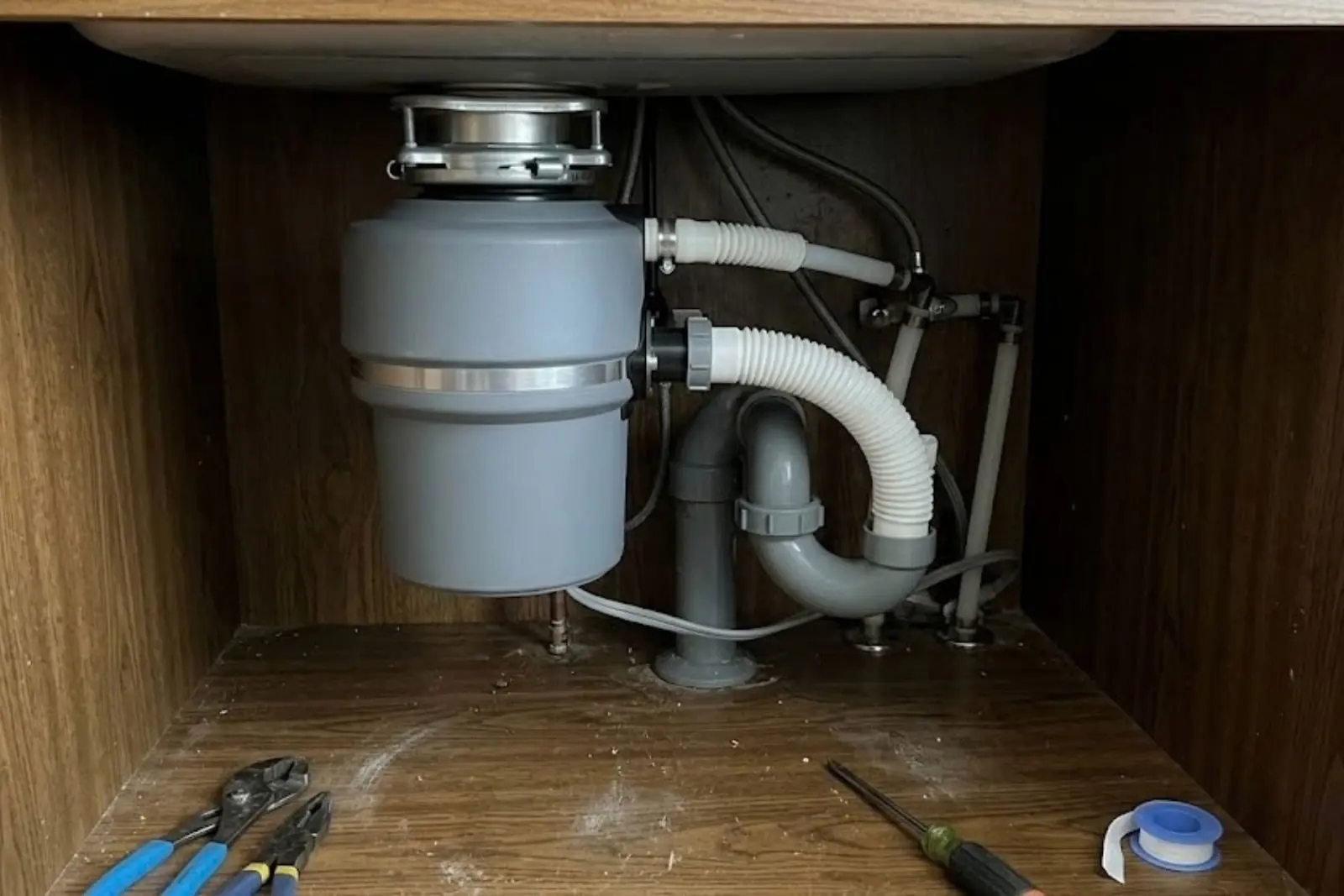
An air switch is a small push button that sits on your countertop or sink rim and runs a garbage disposal without any wall switch. A thin plastic tube connects the button to a switch module under the sink. Press the button, a puff of air travels down the tube, and the module closes the circuit so the disposal runs.
Press it again and the circuit opens. Nothing electrical reaches the button itself, which is why people like it near a wet sink. The disposal plugs into the module, and the module plugs into a nearby outlet.
Why Union City kitchens often get one
The usual reason is simple: the kitchen has no wall switch for the disposal. Many older apartments were wired before disposals were common, so a disposal added later often ended up on a cord with no switch at all, or on a switch in an awkward spot. An air switch solves that without opening a wall.
It also suits renters and owners who want a change that is easy to reverse. The tube and button come out of the counter, and the disposal goes back to its old setup if needed. A built-in wall switch usually means running new wire, and that is a bigger job.
Signs an air switch is a good fit
- The disposal has a plug, or a nearby outlet under the sink already exists.
- There is no wall switch, or the switch sits behind the stove or across the room.
- The sink or countertop has a spare hole, such as an old soap dispenser opening.
- You want the control within reach of the faucet instead of at the door.
- The unit itself runs normally when you power it by other means.
What installation involves, step by step
The button needs a hole, usually a little over an inch wide. Stainless sinks often have a spare opening for a soap pump, and the button can go there. A plain countertop needs a drilled hole, and that is where most of the planning goes.
Once the hole is ready, the plumber seats the button, feeds the tube down to the cabinet and connects it to the switch module. The module is then plugged in, and the disposal cord plugs into the module. The last step is a test run with water flowing.
The install, in order
A tidy install takes these six steps. A kitchen with tight cabinets may take longer than a roomy one.
Check the power
Confirm there is a working outlet under the sink and that the disposal is off at the plug or breaker.
Prepare the hole
Use a spare sink opening or drill a new one, with the right bit for the material.
Seat the button
Set the button in the hole and tighten its nut from below.
Run the tube
Feed the air tube to the switch module without sharp bends or kinks.
Connect the power
Plug the disposal into the module and the module into the outlet.
Test with water
Run the tap, press the button twice and look for leaks at the disposal.
Countertop holes: stone, laminate and stainless
Laminate and stainless are the easy cases. Granite, quartz and other stone need a diamond bit, steady water and patience, because a slip can crack the slab. If you rent, do not drill a counter that belongs to someone else.
If the sink already has a spare opening, use it. If it does not, ask the owner first, and have the hole cut by someone who has the right bit. A plumber can handle the drain side and the tube, but a cracked counter is a costly mistake.
Power safety comes first
A disposal runs on household current, and a sink area is wet. Turn the disposal off at the breaker before anyone reaches under the sink. Only reach the panel if you can do it without standing in water.
Never put a hand into the disposal, even when you think it is off. If the cord has no plug, or the outlet is missing, the power connection is electrical work, and it should be done by a qualified person. A plumber does the drain, the tube and the switch module, and an electrician handles new circuits or hardwired changes.
| Your kitchen | Does an air switch fit? | What to do next |
|---|---|---|
| Disposal on a plug, outlet under the sink | Yes, this is the easiest case | Seat the button, run the tube, plug in the module |
| Disposal wired straight into the wall | Only after the wiring is changed to a plug | Ask a qualified person to handle the connection |
| No outlet under the sink | Not until an outlet is added | Electrical work first, then the switch |
| Stone counter, no spare hole | Possible, but drilling is risky | Use a spare sink opening or hire a stone drill |
| Disposal jams or trips the breaker | A new switch will not fix it | Repair the disposal before adding any switch |
When an air switch is the wrong answer
A new switch cannot repair a disposal that hums, jams or trips a breaker. If the unit is the problem, our garbage disposal repair page explains what a plumber checks first, and a worn-out unit may need replacing instead of a new button. The switch is only a control.
It also does not help a slow sink. If water backs up around the disposal, the trouble is usually in the trap or the line, and drain cleaning comes before any switch work. A faucet that drips onto the new button area is a separate fix, covered under faucet repair.
Local note: older multi-unit kitchens
Union City is the second most densely built municipality in New Jersey, and many of its kitchens sit in multi-unit buildings. In a rented apartment, the sink, counter and wiring belong to the building. That means a drilled hole or a changed connection is an alteration, so ask the landlord or the building super before anyone starts.
What this means for you: get the okay in writing, and ask who is allowed to touch the wiring. Permits are a separate question. In New Jersey a construction permit is needed for work on existing buildings, while routine maintenance is exempt, so ask the Union City construction office whether your change counts before work begins.
What affects the price of an air switch install
There is no single number, because the kitchen decides the work. Counter material is the biggest factor, since stone takes more time than laminate. The state of the outlet, the length of the tube run and whether the disposal needs repair first also change the visit.
We give a clear price before work starts, so you know the scope before anything is drilled. Ask whether the quote covers the button, the module and the test run. A low quote that leaves out the module can cost more by the end.
Nearby towns and what to do next
The same questions come up across the neighborhood, from the brownstones to the towers. Our crews also work in West New York and North Bergen, where many kitchens have the same missing wall switch. A short phone call is enough to sort out whether your sink can take one.
Want a switch on your counter?
Call the 24/7 line and describe your sink, counter and outlet. A plumber will tell you what the visit involves.
Air switch questions
The button and tube are simple, but the power connection and any drilling carry risk. If the disposal needs a new outlet, that is electrical work for a qualified person.
Most plug-in disposals work with one. A disposal wired directly into the wall needs its connection changed first, so check the cord before you buy.
The button carries no current, so it is a sensible choice near water. The module under the sink still holds power, so keep it dry and off the cabinet floor.
Ask the landlord or building super first, because a drilled counter or changed connection is an alteration. Get the okay in writing and ask the Union City construction office whether any permit applies.
Check that the tube is seated at both ends and not kinked, then check the plug and the breaker. If it still fails, the module or the disposal needs a plumber.
Public sources behind this guide
According to these official pages, the rules and safety steps mentioned here apply in New Jersey. Check them for your own address, since rules can change.
- New Jersey Department of Community Affairs, Uniform Construction Code general information: permit and inspection rules for plumbing work on existing buildings.
- NJ Division of Consumer Affairs, State Board of Examiners of Master Plumbers FAQ: who may perform plumbing work and what a licensed business must display.