The fast answer: plunge first, then try soap, then an auger
Most clogged toilets clear with a flange plunger used correctly. If that fails, a squirt of dish soap and a bucket of hot tap water can break the blockage loose, and a toilet auger reaches what the plunger cannot. Boiling water is not part of the plan, and the reason is below.
Work in that order and stop the moment the water drains. If three honest rounds of each method change nothing, or the water rises when you run a sink or shower, the clog is past the toilet and a plumber should look at it.
Before you touch anything: stop the flushing
The first mistake is flushing again to see if it worked. A second flush on a blocked toilet sends more water into a bowl that has nowhere to put it, and the overflow lands on your bathroom floor.
Lift the tank lid and press the rubber flapper down, or turn the small oval valve behind the toilet clockwise to stop the refill. That keeps the tank from adding to the bowl. Put towels around the base, wear rubber gloves and open a window if you can.
Pick the right plunger
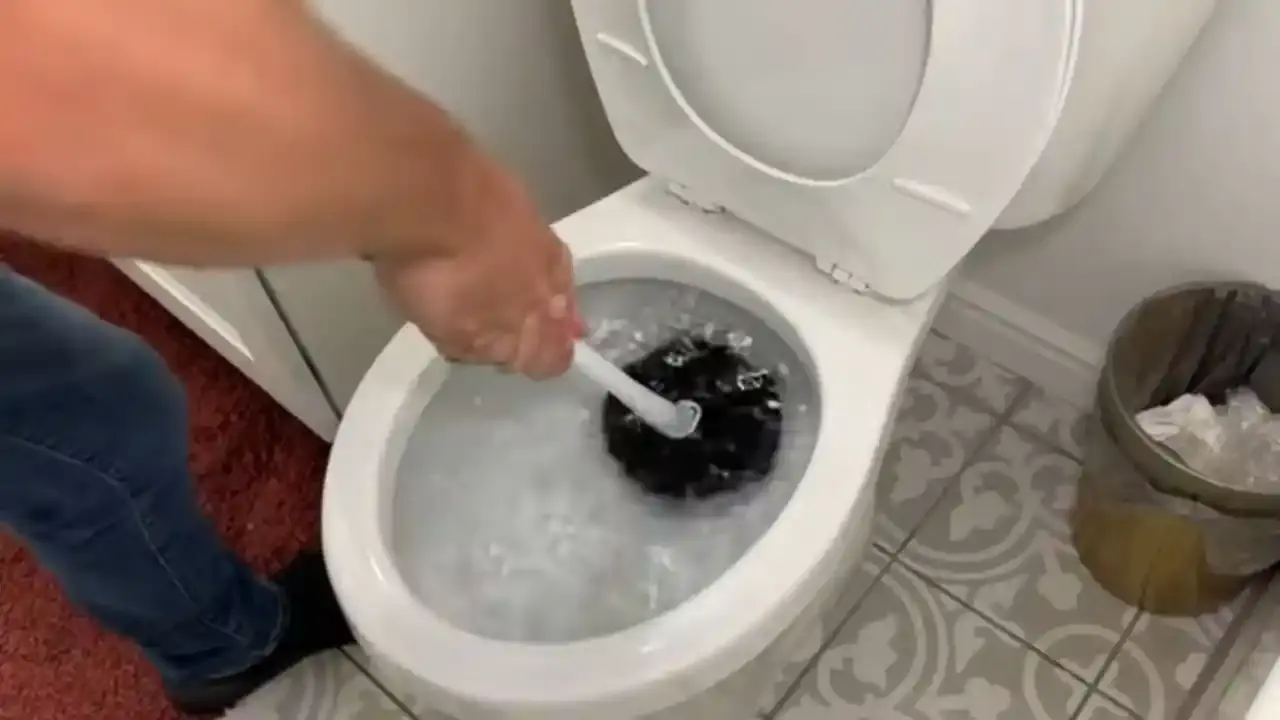
Two plungers look alike and do different jobs. A cup plunger has a flat rubber bell and works on sinks and tubs. A flange plunger has a soft rubber sleeve that folds out below the bell, and that sleeve is made to seat inside the toilet drain opening.
Use the flange type on a toilet. The sleeve creates a seal that pushes water and air through the trap, which is the curved passage built into the bowl. A flat cup plunger on a toilet usually just splashes.
| Tool | Best use | What to watch for |
|---|---|---|
| Flange plunger | Most toilet clogs of paper or waste | Needs enough water in the bowl to cover the rubber |
| Cup plunger | Sinks, tubs and shower drains | Poor seal in a toilet, so it moves water without much force |
| Dish soap and hot tap water | A soft blockage the plunger could not move | Water that is too hot can crack porcelain |
| Toilet auger | A clog sitting in the trap or just past it | Scratches the bowl if you force it, so use the guard |
| Drain snake or hand auger for sinks | Not a toilet tool | A long metal cable can damage the bowl and miss the clog |
Plunger technique that actually works
- Make sure there is enough water in the bowl to cover the rubber. If the bowl is low, add water from a bucket. If it is nearly full, bail some out so it will not spill when you push.
- Set the flange plunger so the sleeve sits in the drain hole and the bell covers it fully. Tilt it slightly as you lower it to let trapped air escape.
- Push down gently the first time. A hard first push forces water back out of the bowl.
- Pull up and push down in a steady rhythm for about fifteen to twenty seconds. The pull stroke does much of the work, because it tugs the blockage back toward the bowl.
- Break the seal after the last stroke. If the water drops quickly, the clog moved. If it drains slowly, repeat the rhythm a few times.
The hot water and dish soap method
Squeeze about a quarter cup of liquid dish soap into the bowl and let it sit for ten minutes. The soap coats the clog and the pipe wall, which helps a stuck mass slide forward.
Then pour a bucket of hot tap water from waist height into the bowl. The weight of the water adds pressure and the warmth softens paper. Do not use boiling water. Porcelain can crack from sudden heat, and a cracked bowl is a replacement, not a repair.
Using a toilet auger without damaging the bowl
A toilet auger is a short metal cable inside a hollow rod with a bent end, sold at hardware stores. The bent end and rubber sleeve protect the porcelain as the cable turns through the trap.
Feed the cable into the drain opening, push gently until you feel resistance, then crank the handle clockwise while pushing forward. When the resistance gives way, pull the cable out slowly and flush once to test. If the cable hooks something and will not turn, stop. Forcing it can drive an object deeper or scratch the bowl.
What flushable wipes really do
Wipes sold as flushable do not break up like toilet paper. They hold together in the pipe, catch on rough spots and gather grease and paper into a mat. A mat of wipes is one of the most common reasons a toilet clogs again a few days after you cleared it.
Put wipes, cotton swabs, dental floss, feminine products and paper towels in the trash. Only human waste and toilet paper belong in a toilet.
Signs the problem is deeper than the toilet
A single bowl blocked by paper is a local problem. These signs point to the branch line or the stack.
- The sink or shower gurgles when you flush, or the toilet gurgles when the washer drains.
- Water backs up in a tub or floor drain after you plunge.
- More than one toilet in the unit is slow at the same time.
- The toilet clears but fills again within a day without anything unusual going down.
- There is a sewage smell near a floor drain or basement fixture.
Why a plunger cannot fix a main line problem
Every fixture in a home drains into a branch, and branches join a vertical stack that drops to the building line. A clog at that junction affects several fixtures, and no amount of plunging reaches it.
That is where a plumber uses a motorized drain cable or camera instead. Our drain cleaning work covers branch and stack blockages, and our toilet repair page covers the toilet itself, including a bowl that keeps clogging because of a worn part or a poor seal.
Local note: shared stacks and the combined sewer
Union City is dense, with 26,455 housing units in about 1.29 square miles, and many buildings have several apartments sharing a vertical stack. If your toilet is slow and a neighbor's is too, the clog may sit in the shared line. Tell the building owner or super before you pour anything down the drain, because they control the stack and may already have a service call open.
The North Hudson Sewerage Authority serves Union City, and its system carries storm runoff and household waste in the same combined pipes. In heavy rain, that system can slow, and a toilet may drain sluggishly even when your plumbing is fine. If the slowdown comes with a storm and clears afterward, the cause may be outside your building, and the Authority takes reports at 201-963-6043 on weekdays.
When to stop and call a licensed plumber
Call when the water level keeps rising, when waste appears at a floor drain, or when you have tried the plunger and auger without success. Also call if the toilet rocks, leaks at the base or has clogged three times in a month.
A repeated clog is a symptom. It can mean a partial blockage in the line, a worn flush mechanism or a bowl with a weak siphon. Dispatch is open 24/7, and same-day appointments are offered when available, so a flooded bathroom does not have to wait.
If the bathroom is flooding, shut the valve behind the toilet and stop using all drains in the unit. We work in the neighboring towns too, including West New York and North Bergen, where the same stack problems turn up in older attached buildings.
What drives the cost of a clogged toilet visit
The price depends on where the clog is and how the plumber gets to it. A simple auger clear is quick, while a toilet that must be pulled off the floor to reach a stuck object takes longer and needs a new wax ring.
A clog in the shared stack or the building line brings in larger equipment and more time. Time of day matters too, because nights and weekends fall under emergency dispatch. You get a clear price before work starts, so ask what the visit includes and whether a camera look is part of it.
Toilet still blocked after you tried everything?
Call the 24/7 line, say what you tried and whether other drains are slow, and a plumber will tell you what to expect.
Clogged toilet questions
Avoid it. Chemical cleaners can sit in a blocked bowl and splash back at you or a plumber. They can also damage old pipes, and they rarely clear paper or wipes.
No. Boiling water can crack porcelain, and a cracked bowl cannot be patched. Use hot tap water instead, poured slowly from waist height.
A partial blockage may remain in the trap or the branch line. Wipes, a weak flush or a worn tank part can also be the cause. If it repeats, have a plumber check the line.
Tell the building owner or super, especially if neighbors are slow too. The shared stack belongs to the building, and an owner can approve work that affects other units.
Stop when the water rises, when waste shows up at another drain, or after several full rounds with no change. More force risks a mess and a cracked fitting.
Public sources behind this guide
According to these official pages, the rules and safety steps mentioned here apply in New Jersey. Check them for your own address, since rules can change.
- New Jersey Department of Community Affairs, Uniform Construction Code general information: permit and inspection rules for plumbing work on existing buildings.
- NJ Division of Consumer Affairs, State Board of Examiners of Master Plumbers FAQ: who may perform plumbing work and what a licensed business must display.
- North Hudson Sewerage Authority, about the system: the towns it serves and its combined sewer network.