Toilet overflowing now: stop the water first
An overflowing toilet is an emergency because the bowl keeps filling while you read this. Our dispatch line is open 24/7, and we book same-day appointments when a plumber is free. Do these things while you wait.
- Do not flush again. Each flush adds more water to the bowl.
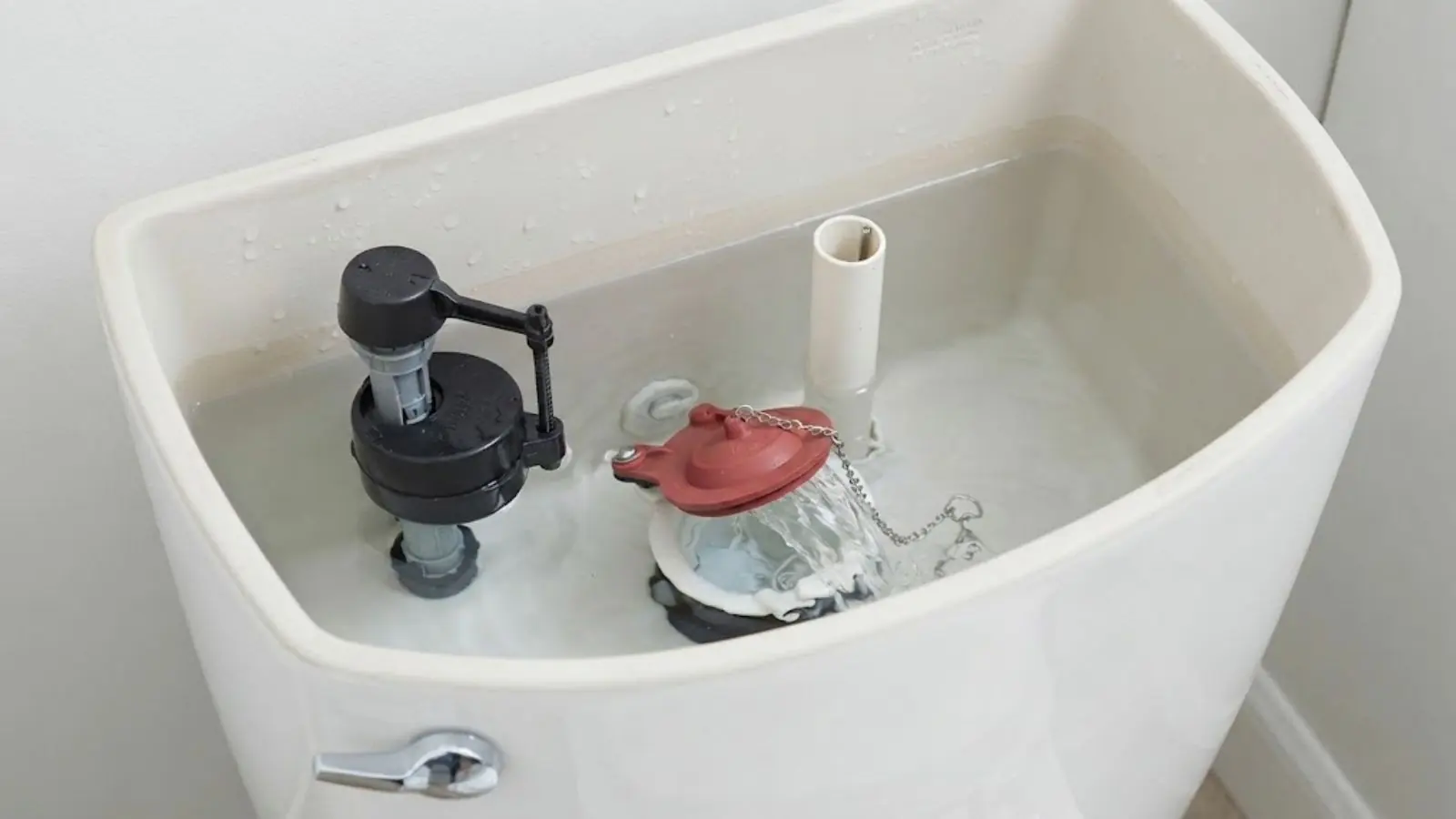
- Take the tank lid off and lift the rubber flapper, or push it down firmly, to stop water from entering the bowl.
- Turn the oval handle of the supply stop, the small valve on the wall or floor behind the toilet, clockwise until it stops.
- Mop up standing water with towels and keep the area ventilated.
- Do not plunge a bowl that is already overflowing. Call first and wait for the water to settle.
If the toilet is overflowing and the supply stop will not turn, close the main valve for your unit or the building. Tell dispatch what you see, because a stuck valve changes the parts and tools the plumber brings.
Toilet that keeps running
A toilet that hisses or refills every few minutes wastes water and usually has one of three culprits. The flapper may be worn and leaking into the bowl, the fill valve may fail to shut off, or the chain may be too long and stuck under the flapper. A simple test is to drop food coloring in the tank. If color shows up in the bowl without a flush, the flapper is leaking.
Replacing a flapper, fill valve or flush valve is usually a short visit. In older fixtures the parts may be obsolete and the plumber may suggest a new toilet instead of chasing replacements.
Signs your toilet needs repair soon
Small problems waste water and often turn into a mess on the floor.
- The tank refills on its own with no one using the toilet.
- Water trickles into the bowl, or a hissing sound runs after a flush.
- The handle sticks, feels loose or needs jiggling.
- The toilet rocks slightly when someone sits.
Leaking around the base of the toilet
Water on the floor around a toilet base usually comes from a failed wax ring. The ring sits between the toilet and the floor flange and seals the drain connection. Sometimes the sweating tank or a loose supply line is the real source, so the plumber checks those before pulling the toilet.
A slow base leak can rot the subfloor and stain the ceiling of the unit below. In an apartment, that second problem becomes the neighbor's problem fast. If a stain is appearing downstairs, treat it as urgent and read about leak detection too.
Toilet flange repair
The flange is the ring bolted to the floor that holds the toilet and connects it to the drain. When a flange cracks, corrodes or sits too low, the toilet rocks and a new wax ring will not seal. Repair options include a repair ring that screws over a broken flange, or a replacement flange when the pipe below is sound.
If the floor around the flange is soft, a carpenter may need to repair the subfloor. Plumbers do not do structural carpentry, and we say so before work starts.
Toilet leak or running toilet: a quick sorting guide
Clear water at the base is a seal or supply problem. Clear water running in the bowl is a flapper or fill valve problem. Dark or smelly water at the base, or a toilet that gurgles, points at the drain. Sorting by water type saves a diagnostic step and tells dispatch which parts to load.
| What you see | Likely cause | Typical fix |
|---|---|---|
| Constant trickle in the bowl | Worn flapper or chain too tight | New flapper and chain adjustment |
| Tank keeps refilling | Fill valve or float failing | Replace the fill valve |
| Water pooled at the base | Failed wax ring or loose bolts | Pull the toilet, replace the ring, reset |
| Rocking toilet | Damaged flange or uneven floor | Flange repair, shims or reset |
| Bowl will not drain | Clog in the trap or branch drain | Snake, then check the line |
When the drain is the problem, not the toilet
A toilet that clogs again right after clearing may have a blockage in the drain behind it. If a tub or sink nearby gurgles when the toilet flushes, the shared branch is slow. A plumber clears that with a cable, and drain cleaning explains the options. A repeat clog in an older building may also need a camera look at the pipe.
Toilet installation and replacement
Replacing a toilet is planned work, and it goes faster when you choose the model first. Check the rough-in distance, which is the measurement from the wall to the center of the floor drain. Common sizes are not universal, so measure before you buy. Tell us whether you want a standard or elongated bowl, and whether the old toilet is a floor-mount or wall-hung model.
Bring the new toilet, a new wax ring or a flange kit if you have one, and the new supply line. We can supply the small parts if you prefer. Before the visit, clear the bathroom so the plumber has room to lift the old fixture.
Water use and shared risers in apartments
Toilets are among the largest water users in a household, and a silent running leak adds to the building's bill. In a building with a shared riser, a slow leak from one unit can raise the cost for everyone, and a burst supply line can drop pressure upstairs. Tell the super if you shut the building valve, because other units lose water too. For a split supply line, see burst pipe repair.
What toilet repair costs
Price depends on the work. We state a clear price before work starts, and these are the factors that matter:
Landlords often pay for repairs in rental units, so check your lease and tell the owner first when you can. Insurance may cover sudden water damage but rarely covers a worn flapper or wax ring.
Want your real number? Call and describe the job.
Call (551) 249-3045What happens when you call
Most toilet visits are short once the plumber has the right part in hand.
Stop the water
Dispatch helps you close the supply stop or the building valve.
Book the visit
We schedule the next open plumber, same day when one is free.
Diagnose and repair
The plumber finds the real source, repairs or replaces parts and tests the flush.
Confirm the seal
We check the base, the supply line and the drain for leaks before leaving.
Toilet overflowing or leaking?
Call the 24/7 line now. Close the supply stop behind the toilet and tell dispatch what you see.
Related plumbing help
If the bathroom has other aging fixtures, ask us about faucet repair during the same visit to save a trip. We also send plumbers to Hoboken, and the repair steps for these fixtures are the same there.
Toilet repair questions in Union City
Yes. Dispatch is open all day and night, every day of the week. Tell the dispatcher if water is on the floor so the call is booked first.
Look behind the toilet, on the wall or floor, for a small oval or round handle on a thin pipe. Turn it clockwise to close it.
The flapper may be leaking or the fill valve may not be shutting off. A few drops of food coloring in the tank reveal a flapper leak.
It can be. A failed wax ring leaks with every flush and can rot the floor and stain the ceiling of the unit below.
Many owners do. The tricky parts are the flange, the wax ring seal and lifting the heavy fixture, and a poor seal leaks later.
Measure the rough-in from the wall to the drain center, choose the bowl shape and have the toilet on site. Parts like the supply line can be bought on the day.
That depends on the lease and on what failed. Tell the owner or super first, and keep the plumber's invoice.
Still have a question? A dispatcher answers around the clock.
Call (551) 249-3045Public sources behind toilet repair
According to these official pages, the rules and safety steps mentioned here apply in New Jersey. Check them for your own address, since rules can change.
- New Jersey Department of Community Affairs, Uniform Construction Code general information: permit and inspection rules for plumbing work on existing buildings.
- NJ Division of Consumer Affairs, State Board of Examiners of Master Plumbers FAQ: who may perform plumbing work and what a licensed business must display.
- North Hudson Sewerage Authority, about the system: the towns it serves and its combined sewer network.